
How to resolve AdBlock issue?
X
How to resolve AdBlock issue?
X

Earlier this year I came across a manuscript that argued the current classification of fatty acids, which is based on chemical composition, is inaccurate when discussing health and disease. With 516 references to research evaluating the physiological effects of each fatty acid known to exist, the paper proposed a new classification system for fatty acids that is based upon their biological activity.
Although this is a step in the right direction, even the physiological effects of fatty acids are not always absolute. For instance, milk-fat is about 70% saturated fatty acids (SFA) and 30% palmitic acid, which according to the aforementioned manuscript is a fatty acid that does increase one or more cardiometabolic risk factors. However, not all sources of dairy fat have similar effects despite identical fatty acid profiles.
A fairly recent review of the influence of dairy products and milk-fat consumption on cardiovascular disease (CVD) risk found that CVD risk is increased with diets high in butter or whole-fat milk when compared to diets high in cheese or whole-fat yogurt. These conclusions were partially based on the results of randomized controlled trials (RCT) that compared one form of milk-fat to another.
In 4 of 4 short-term clinical studies, the intake of natural cheese resulted in a significant or nearly significant (P = 0.06) lowering of LDL-C compared with butter intake of equal total fat and SF content. The mechanism of action for the relative neutral effect of cheese on blood lipids is unknown.
It is worth pointing out that the amount of cheese used in three of these studies (1, 2, 3) averaged 150 grams daily while the fourth study averaged 305 grams daily; this is clearly a significant amount of dairy fat to add into the diet. If a fatty acid being a fatty acid were all that mattered, then butter and cheese should be expected to have similar effects – yet they do not. As if nutrition and dietetics were not complicated enough, it is time we began to appreciate that the food matrix in which nutrients are delivered influences their health effects.
The milk-fat globule membrane
Nowhere is the importance of food structure more evident than in evolution’s recipe for the nutrition of mammalian infants: milk. This is the only food that evolved to completely satisfy the needs of the offspring during infancy, and any components or structures added to milk have done so in order to maximize the survival changes of the offspring without placing the mother at a selective disadvantage.
Native milk-fat is not simply a collection of triglycerides and fatty acids, but rather a collection of bioactive lipid components. This includes the milk-fat globule membrane (MFGM), a three-layered membrane composed of proteins, lipids, and numerous minor bioactive sterols that encloses the milk fat globules. It is primarily this macrostructure that distinguishes milk-fat from all other animal- and plant-based fats. As discussed by Argov et al,
The milk fat globule remains the least understood component of one of the world’s most valuable agricultural commodities, milk. Darwinian selective pressure drove the emergence of a remarkable lipid delivery system in which the particles and their surface properties are unique to any other biological lipid export system.
Although not the focus of this article, it is interesting to speculate how large of an influence the MFGM plays in infant health. There is no shortage of research documenting the superiority of breast feeding an infant compared to formula feeding, and while most abundant milk proteins and carbohydrates (i.e. caseins and lactose) are found in both milk and infants’ formula, the lipid structure is found only in milk.
It is possible that the MFGM explains the discrepancies between different forms of dairy on CVD risk. This biological membrane ensures structural integrity, protection, and stability of the fat within milk, and is destabilized upon mechanical trauma such as the churning process that creates butter or homogenization. Thus, non-homogenized milk-fat and cheese still contain intact MFGMs, whereas butter and homogenized dairy do not.

To date, only a single human study has investigated this hypothesis. Published in the American Journal of Clinical Nutrition by Rosqvist et al from Sweden in May of this year, the single-blind, randomized controlled trial consisted of 46 healthy older adults consuming, for 8 weeks, 40 grams of fat from non-homogenized cream that was verified to have an intact MFGM or 40 grams of fat from butter oil (also called ghee) that did not have intact MFGM.
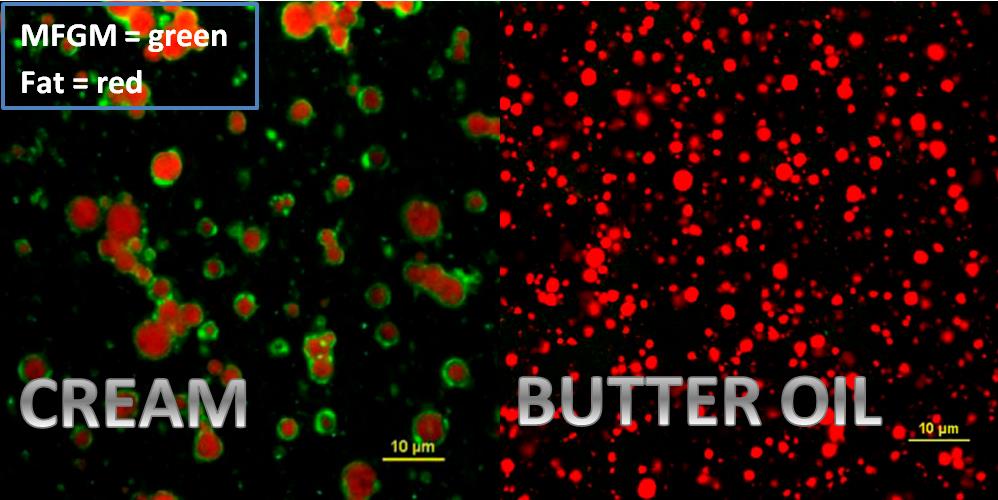
The cream and butter oil were provided to the participants during weekly meetings at the research clinic alongside a biscuit that contained milk protein isolate so as to balance the intervention protein and calcium content. Weekly weighted food-logs suggested that the intervention was successful in maintaining similar and unchanged total caloric intakes, although there was a small expected redistribution of calories from carbohydrates to total and saturated fat.
In accordance with previous studies on butter, the butter oil group had significantly greater total-, LDL-, and non-HDL-cholesterol, apolipoprotein (Apo) B concentrations, and an apoB to apoA1 ratio after the 8-week intervention; however, no such changes were observed with the consumption of cream. In fact, cream actually led to a reduction in non-HDL-c and the apoB to apoA1 ratio. Additionally, the expression of 19 peripheral blood mononuclear cell (PBMC) genes were significantly reduced in the cream group and increased in the butter oil group, and changes in most of these genes correlated with changes in one or more of the changes in blood lipids.
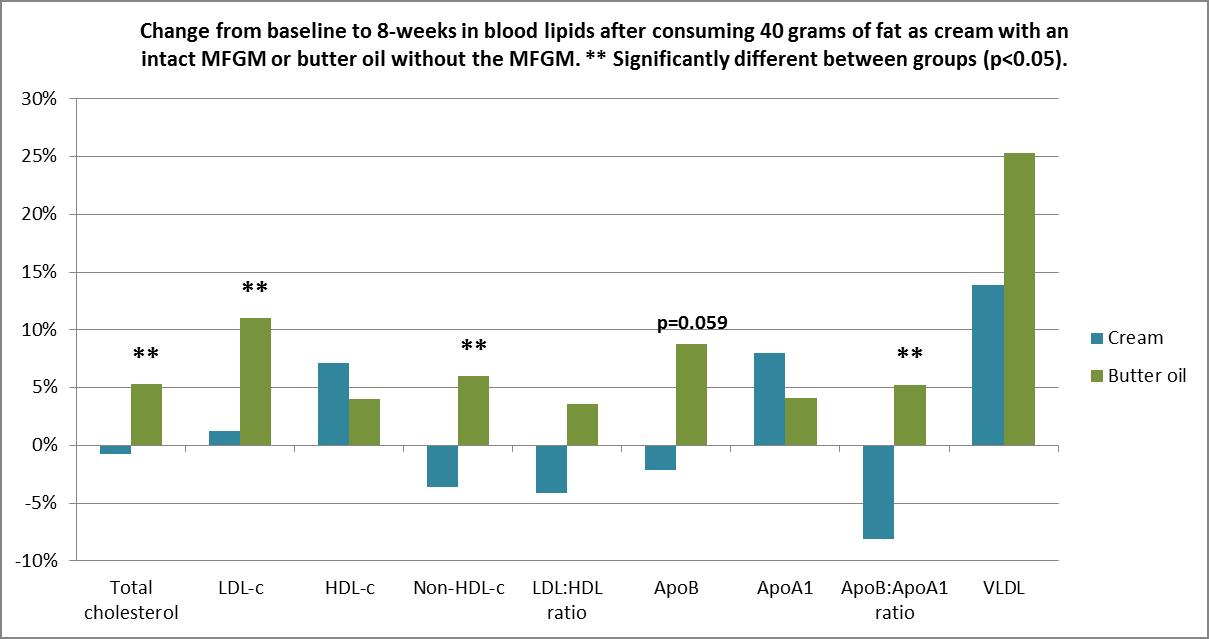
The mechanisms through which the MFGM counteracts the cholesterol-raising effects of milk-fat are not well established, but animal research suggests that it involves reduced cholesterol absorption, and/or phospholipid-induced alterations in liver gene expression that reduce the hepatic accumulation of cholesterol and triglycerides. Although lipid absorption was not assessed in Rosqvist’s human trial, all 15 tested PBMC genes were down-regulated with the cream intervention and it has been suggested that PBMC gene expression after dietary interventions reflect changes within the liver and can be used for studying the response of certain genes related to fatty acid and cholesterol metabolism. These human findings therefore support the idea that the MFGM acts at least partially through alterations in gene expression.
Can the MFGM enhance muscular strength?
More recently, Soga et al from Japan sought to evaluate what effects MFGM supplementation would have on muscular adaptations to resistance training. A small group (n=14) of middle-aged men were recruited to undergo a 4-week randomized, double-blind, placebo-controlled, crossover trial with supplementation of 1 gram of MFGM per day, which is equivalent to about 600 mL of whole milk (~20 g milk-fat) or a whole-milk powder placebo. The MFGM and placebo tablets could be taken any time on non-training days, and 1 hour before training on training days.
Training was conducted twice weekly on nonconsecutive days for 4 weeks using StrengthErgo 240 stationary cycling exercise machines (Mitsubishi Electric Corporation, Tokyo, Japan). The subjects completed 3 sets of 15 % maximal voluntary contraction (MVC) cycle exercises for 60 s and 7 sets of 20 % MVC cycle exercises for 40 s at 50 rpm.
Notably, the MFGM supplements were created from filtration of buttermilk. As outlined in the first image of this article, buttermilk is the liquid “waste” product during the churning of cream when making butter. This study does thus confirm that buttermilk will have residual MFGM, albeit not surrounding any fat globules.
Overall, there were no changes in body composition, blood lipids and glucose, or liver enzymes, and the intervention was well-tolerated with no reported adverse events. However, there was a significant increase in red blood cell counts and hemoglobin in the MFGM-supplemented group. The MFGM is abundant in phospholipids, which are critical components of cell membranes, leading the researchers to hypothesize that their absorption might be incorporated into and stabilize the cell membranes of RBCs, hence retaining the hemoglobin.
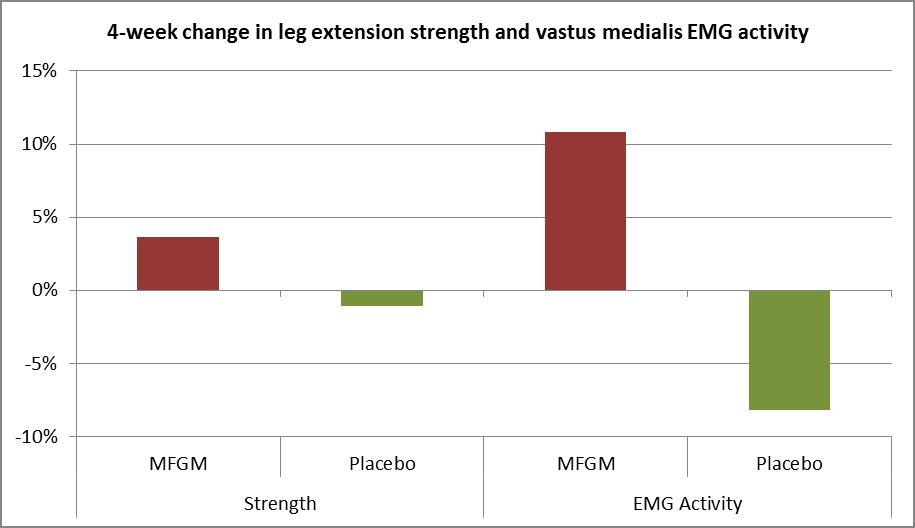 The training program clearly was not a standard resistance training protocol, with a very limited type and intensity of exercise. Its inefficiency was evident by the fact that there were no changes in leg extensions strength in the placebo group, nor were there changes in neuromuscular measurements. However, MFGM supplementation did lead to significant strength gains, likely through the documented increases in motor unit activity of the quadriceps. It may therefore be possible that the MFGM phospholipids also act to somehow improve neuromuscular function, at least when there is a low (and normally insufficient) stimulus from resistance training.
These changes have certainly been supported by animal studies that show significantly improved age-related deficits in muscle function via improving neuromuscular development and IGF-1 signaling, as well as swimming endurance capacity, when MFGM supplementation is combined with habitual exercise.
There is no doubt that the macronutrient composition of the diet plays a role in health, but the practice of talking about food as a composite of nutrients (called “nutritionism”) is not always beneficial. There has recently been an emerging interest in how the food matrix influences the effects of nutrients it contains. The MFGM is but one example, and two human studies have strongly supported the notion that it not only counters known cholesterol-raising effects of saturated fat, but may influence other important components of health such as neuromuscular function and strength development.
Clearly more human research is needed to define dose-dependent effects and whether the MFGM acts similarly between various dairy products (i.e. cheese vs cream). It would also be interesting to see how buttermilk that contains residual MFGMs that are not surrounding fat globules acts in comparison to milk-fat that does have an intact MFGM.
Although research is scarce at the moment, evolution created the MFGM for a reason, and it does appear prudent to choose non-homogenized dairy products when available and limit butter in favor of cream and cheese.
When you subscribe to the blog, we will send you an e-mail when there are new updates on the site so you wouldn't miss them.
Super Human Radio is the world's longest running broadcast dedicated to health, fitness & anti-aging with an emphasis on exercise, nutrition, and hormone management. This one of the most progressive podcasts for preventative & regenerative techniques designed to increase longevity. More
2908 Brownsboro Rd Ste 103
Louisville, Kentucky 40206
(502)-690-2200

Super Human Radio is the world's longest running broadcast dedicated to fitness, health, and anti-aging with emphasis on exercise, nutrition, and hormone management. The most progressive source of information for preventative & regenerative techniques... More
2908 Brownsboro Rd Ste 103
Louisville, Kentucky 40206
United States of America
+1 502-690-2200
Comments
RSS feed for comments to this post