
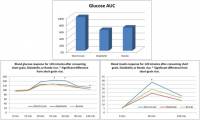
There is a growing body of research suggesting resistant starches (RS) to improve glycemic control and insulin sensitivity, increase microbial diversity and digestive health, and aid in weight management. Ironically, the “unhealthy” white rice is one such source of RS, at least after it has cooked and cooled. This is because the cooking and cooling process leads to retrograded amylose and starch that is resistant to our digestive enzymes. However, the actual RS content of rice displays wide genetic diversity, with some data reporting ranges of 2 to 6.7 % dry weight. This begs the question of whether eating rice with more RS is worth the effort to seek it out, and our answer comes from the work of Alison Zenel and Maria Stewart at the University of Hawaii. They recruited 18 young and healthy men and women from their university to consume three different rice cultivars on three different occasions...