• +1 502-690-2200
  • This email address is being protected from spambots. You need JavaScript enabled to view it.

Carl Lanore has your back in a way that, traditionally, very few people in this life ever do. On the surface he is the broadcast host of his own Internet program “Super Human Radio” on the SHOUTcast digital network with a solid listenership of over half-a-million homogenous people that is growing every week.

More About Carl Lanore

The Shocking Truth About Acid Reflux

The Shocking Truth About Acid Reflux

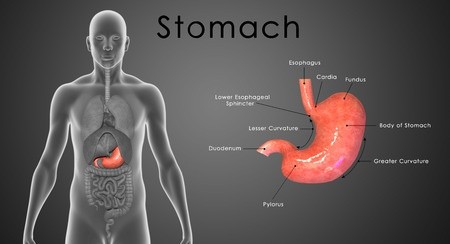
Every time I read someone stating that acidic foods cause acid reflux it makes me cringe. Let’s get something straight here. Acid reflux is a result of the mechanical failure of the esophageal sphincter and not the content of acidic foods you’re eating. None of the foods you’re eating are higher in acidity than the normal content of hydrochloric acid in your stomach when you are in-between meals. The PH of your stomach, assuming its working properly, is between 1.5 and 3.5. That’s because hydrochloric acid by itself has a PH of 2.0. Some would have you believe that acidic food consumption is what creates the burning sensation in your stomach area. I say area for a reason. You’re NOT feeling the burning sensation in your stomach. Your stomach is designed to handle hydrochloric acid without any sensations. Your esophagus on the other hand is not and this is where the...
Continue reading

Super Human Roundup: Metabolic profiles, strength and cognition, and anorexia

Super Human Roundup: Metabolic profiles, strength and cognition, and anorexia


Metabolic profiles of male meat eaters, fish eaters, vegetarians, and vegans It isn’t far-fetched to think that individuals with difference dietary habits might have different metabolic profiles. However, this issue has not been well investigated, leading Schmidt et al to investigate the differences in concentrations of circulating metabolites in middle-aged healthy men from the Oxford component of the European Prospective Investigation into Cancer and Nutrition (EPIC-Oxford). Using data from a food-frequency questionnaire, the researchers randomly selected 91-97 men per group who could be classified as meat eaters, fish eaters (who do not eat meat but do eat fish), vegetarians (who eat neither meat nor fish), and vegans (who do not eat meat, fish, dairy products, or eggs). Of the 118 total metabolites analyzed, concentrations of 12 sphingolipids (86%), 61 glycerophospholipids (79%), 6 acylcarnitines (67%), 2 biogenic amines (67%), and 12 amino acids (63%) varied across the 4 diet groups. In the...

Continue reading

The satiating effects of sugar don’t differ between fructose and glucose

The satiating effects of sugar don’t differ between fructose and glucose


Generally speaking, eating solid food is more satiating than drinking liquid calories. There are notable exceptions, such as soup and whey protein, but most people aren’t drinking those when they want to quench their thirst. Rather, many individuals consume sugar-sweetened beverages (SSBs), and accumulating evidence suggests that liquid carbohydrates are indeed less satiating than their solid counterparts and may lead to weight gain in the general population. A consideration of our evolutionary history may help to explain why. For all but the last 11,000 years or so, the predominant fluids we consumed were breast milk and water. Milk doesn’t run into the same issues as SSBs because only 36% of its calories come from carbohydrates, with the remaining being fat and whey and casein proteins. Water doesn’t run into problems because it is, well, water. We did not evolve consuming SSBs and it would make no logical sense for them to...

Continue reading

Don't Let Monsanto Use The EFSA To Change The Conversation

Don't Let Monsanto Use The EFSA To Change The Conversation

Monsanto and Chemical Engineers are rejoicing right now. The European Food Safety Authority (EFSA) has just concluded their own assessment of the cancer causing effect of glyphosate (Roundup.) They have concluded that it’s unlikely to cause DNA damage or to be genotoxic1. This is in direct opposition to the World Health Organization's (WHO) recent conclusion. Much of the discrepancy between the two organizations is due to the different ways they have assessed the popular herbicide made by Monsanto. The WHO has looked at the available data and research on various formulation that include glyphosate.  The EFSA has looked solely at the available research on glyphosate alone. Don’t Run Out and Buy Monsanto Stock Just Yet While the WHO's calling for glyphosate to carry the “probable carcinogen” warning was a blow to Monsanto, this is not the thrust of the problem with the popular herbicide as seen by scientist who are doing...

Continue reading

If you overeat, limit saturated fat; your liver will thank you

If you overeat, limit saturated fat; your liver will thank you


We all have moments of indulgence and overeating, and in the grand scheme of things this won’t have much effect on anything because there will be other days where we under-eat to balance out long-term energy balance. However, there are circumstances where the overeating can be chronic. The most well-known example is obesity, which is simply the result of a chronic energy surplus. (I use the term “simply” very loosely because although obesity is essentially the same as a chronic energy surplus, there can be many reasons for why the surplus exists, thus making obesity a multifaceted disease. But I digress.). Another example may be a bodybuilder or generic athlete interested in building muscle, where an energy surplus to promote anabolism is necessary. Under these circumstances, the body is going to be primarily in “storage” mode and this arguably makes what you eat more important. One aspect of diet that may...

Continue reading

Do You Use Alcohol To Sleep? Maybe It's Not A Good Idea

Do You Use Alcohol To Sleep? Maybe It's Not A Good Idea


I have lots of friends who tell me they like to have a glass of bourbon or a couple glasses of wine in the evening because it helps them "wind down" and they sleep better. I even know a physician whom I have a lot of respect for who told me he's been doing this for years. We very rarely drink alcohol any more. Last night Alisa and I entertained a team member, Jeff Thompson, here in Louisville and then we went to the Kentucky Muscle event. We each had a couple glasses of wine and then I had a cup of decaf coffee with a shot of Sambuca after my meal (hey.. I'm Italian.. It's our thing). We stayed out later than I'm accustomed to since I'm in bed as a rule by 9:00PM. We didn't get home until around 10:30PM. I sleep with my FitBit so it tracks my...

Continue reading

Super Human Roundup: Protein and VAT, fat and metabolic syndrome, and carbohydrates and type-2 diabetes

Super Human Roundup: Protein and VAT, fat and metabolic syndrome, and carbohydrates and type-2 diabetes


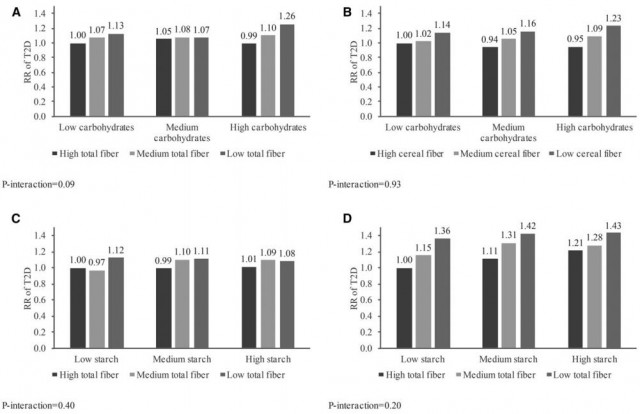
More protein, more VAT? Abdominal obesity is a stronger risk factor for cardiometabolic diseases than whole-body obesity, and this is believed to be mediated by the accumulation of visceral adipose tissue (VAT), which is basically fat that accumulates around organs rather than under the skin. Despite evidence suggesting VAT is predominately affected by the non-caloric qualitative aspects of diet, little is known about the association between macronutrient composition of diet and VAT. Moslehi et al from Iran sought to fill this knowledge gap. Using a cohort of 1254 participants, the researchers estimated the effects of substituting 5% of energy from one type of macronutrient by 5% of energy from another macronutrient on the change in VAT over 3-years. Surprisingly (at least to me), increased VAT was significantly associated with increased protein at the expense of any other macronutrient in women and increasing MUFA at the expense of protein and PUFAs in...

Continue reading

HIIT for health in the obese – similar improvements as traditional cardio in one-fourth the time

HIIT for health in the obese – similar improvements as traditional cardio in one-fourth the time


Despite the well-established benefits of exercise for improving health, the largest and most stubborn barrier for individuals to overcome is adherence. Because lack of time is a common excuse, increasing attention has been given to modes of training that require relatively little time. High-intensity interval training (HIIT) describes exercise characterized by brief intermittent bursts of vigorous activity, interspersed by periods of rest or low-intensity exercise. Considerable evidence currently exists to support a role for HIIT as a time-efficient training method for inducing cardiovascular and muscular adaptations that are linked with improved health outcomes. Thus, HIIT may be a reasonable solution for time-constrained inactive individuals. Two recent studies support this view. The first study involved 23 sedentary, overweight-obese young men from the University of Alabama at Birmingham and randomized them to complete a 6-week HIIT or moderate-intensity continuous training (MIT) program with no other dietary or physical activity guidelines. The HIIT protocol...

Continue reading

Lutein up your life with eggs and leafy greens

Lutein up your life with eggs and leafy greens


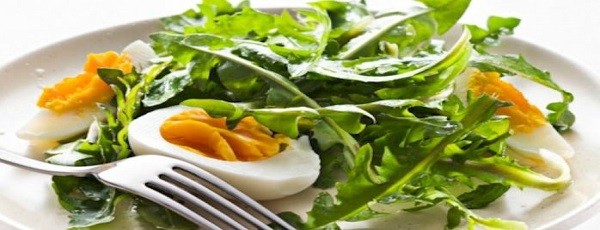
Lutein is a prevalent carotenoid in nature that plays an essential role in plant health by harvesting blue light and protecting the chloroplasts from oxidative damage. Humans and other primates are unique in that we are the only animals to selectively accumulate lutein in the retina of the eye and brain. Accumulation within the retina bestows us with a normal yellow macular pigmentation and protects the eye against blue light and oxidative damage. In what is surely the largest experimental trial to date to investigate age-related macular degeneration (AMD), supplementing lutein alongside other antioxidants reduced the progression of AMD to its advanced forms by 10% compared to the antioxidants alone. Within the brain, lutein is the most prevalent carotenoid where it is believed to be neuroprotective through its role as an antioxidant. As outlined by a team of investigators from three Universities that seeks to understand the uptake and bio-localization of...

Continue reading

Super Human Roundup: Mediterranean protects the heart, gut, and eyes PLUS what defines this diet?

Super Human Roundup: Mediterranean protects the heart, gut, and eyes PLUS what defines this diet?


A Mediterranean diet may save the heart from obesity This conclusion comes from the recent work of Eguaras et al out of Spain. They prospectively assessed the association between obesity and incidence of major clinical cardiovascular events within categories of adherence to the Mediterranean diet (MedDiet) in a sample of 19,065 Spanish university graduates. A food frequency questionnaire was used to score each individual from 0-9 points with more points meaning greater adherence to MedDiet principles. Overall, the participants were middle-aged at baseline (38 years) and at a low risk of cardiovascular disease (CVD). As such, it is not surprising that after an average follow-up duration of 10.9 years only 152 cases of cardiovascular events were reported. This is about 0.8% of the study sample. Nonetheless, after adjusting for confounding variables, individuals with the highest adherence (>7 points) showed a 53% lower risk of having a cardiovascular event than participants with...

Continue reading
SHR Logo

Super Human Radio is the world's longest running broadcast dedicated to health, fitness & anti-aging with an emphasis on exercise, nutrition, and hormone management. This one of the most progressive podcasts for preventative & regenerative techniques designed to increase longevity. More

2908 Brownsboro Rd Ste 103
Louisville, Kentucky 40206

(502)-690-2200

SHR Logo

Super Human Radio is the world's longest running broadcast dedicated to fitness, health, and anti-aging with emphasis on exercise, nutrition, and hormone management. The most progressive source of information for preventative & regenerative techniques... More

2908 Brownsboro Rd Ste 103
Louisville, Kentucky 40206
United States of America

+1 502-690-2200