
• +1 502-690-2200
  • This email address is being protected from spambots. You need JavaScript enabled to view it.

Lifelong effects of ketogenic diet in mice

Lifelong effects of ketogenic diet in mice
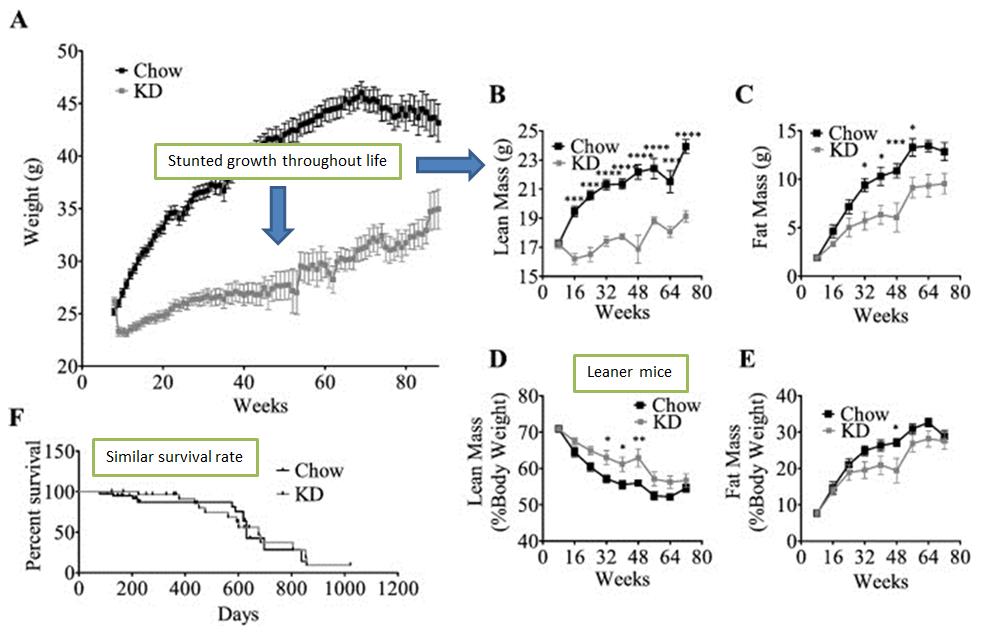
Body composition changes and survival rate in keto-fed and chow-fed mice over a lifetime.
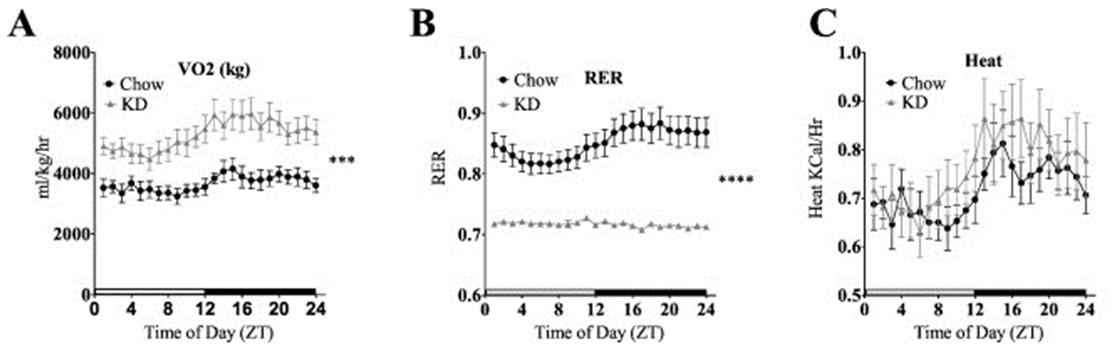
Oxygen consumption (VO2), respiratory exchange ratio (RER), and heat production in keto-fed and chow-fed mice.
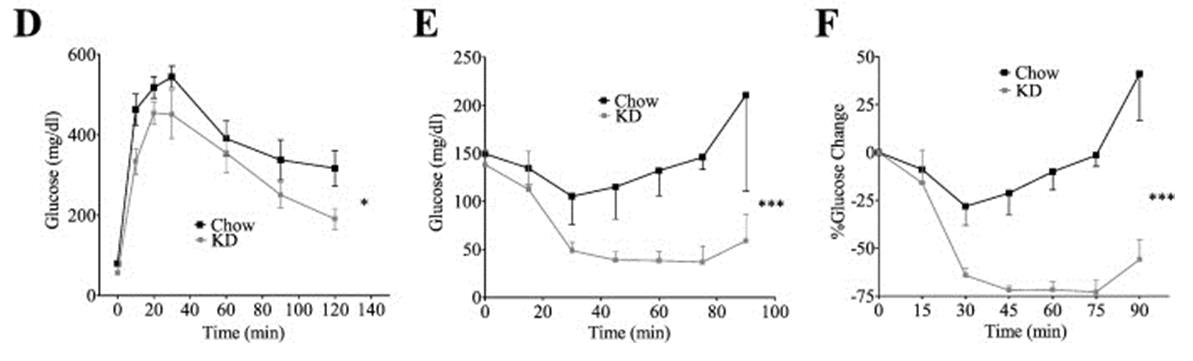
Blood glucose in response to a glucose-challenge test (A) and total blood glucose (E) and % change (F) after exogenous insulin administration in keto-fed and chow-fed mice.
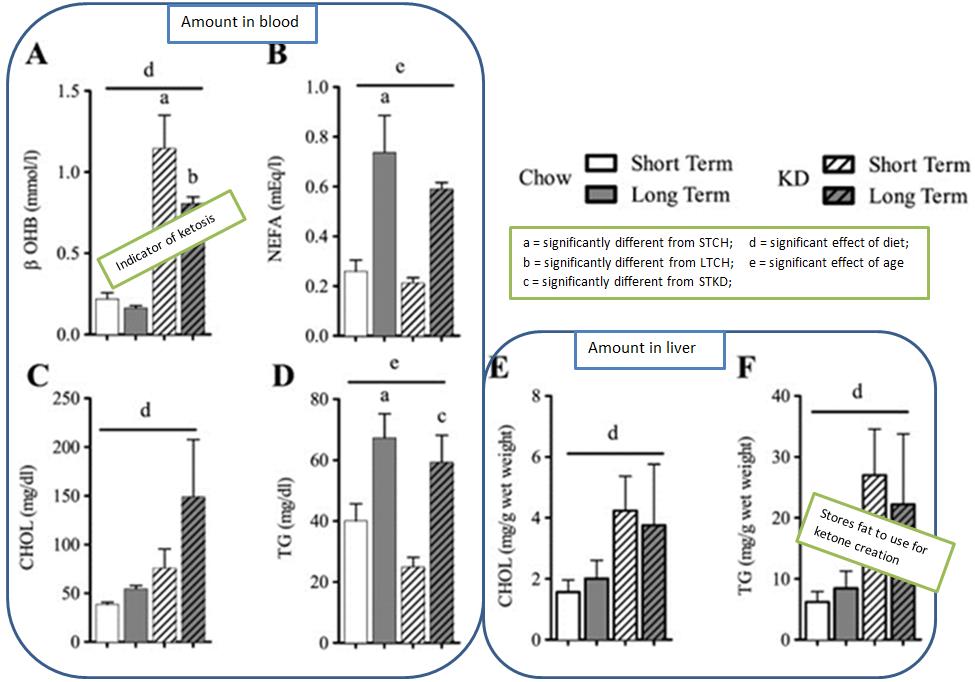
Beta-hydroxybutyrate (BOHB), non-esterfied fatty acid (NEFA), cholesterol (chol), and triglycerides (TG) in serum (A-D) and liver (E & F) in keto-fed and chow-fed mice.
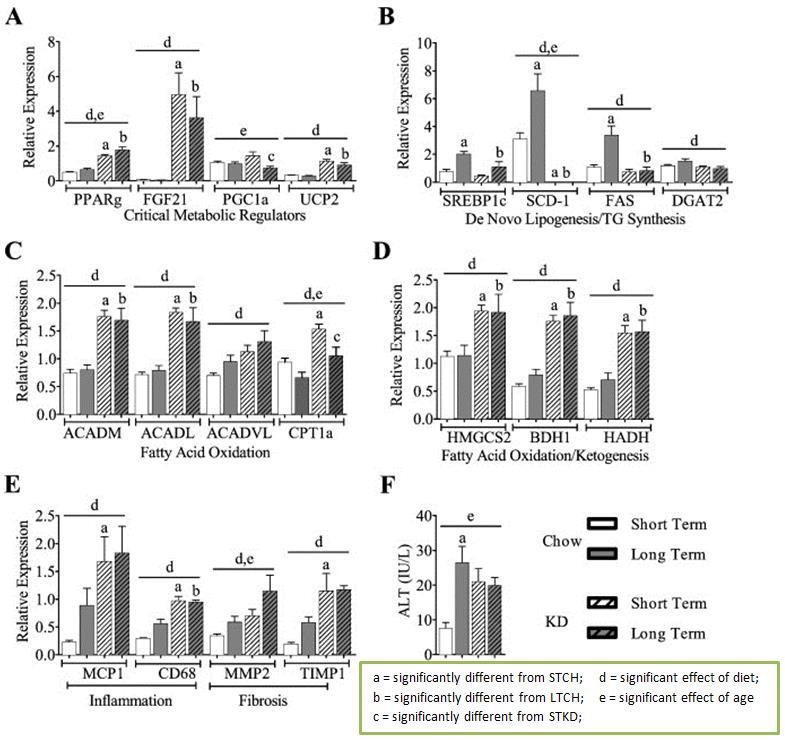
Gene expression in keto-fed and chow-fed mice
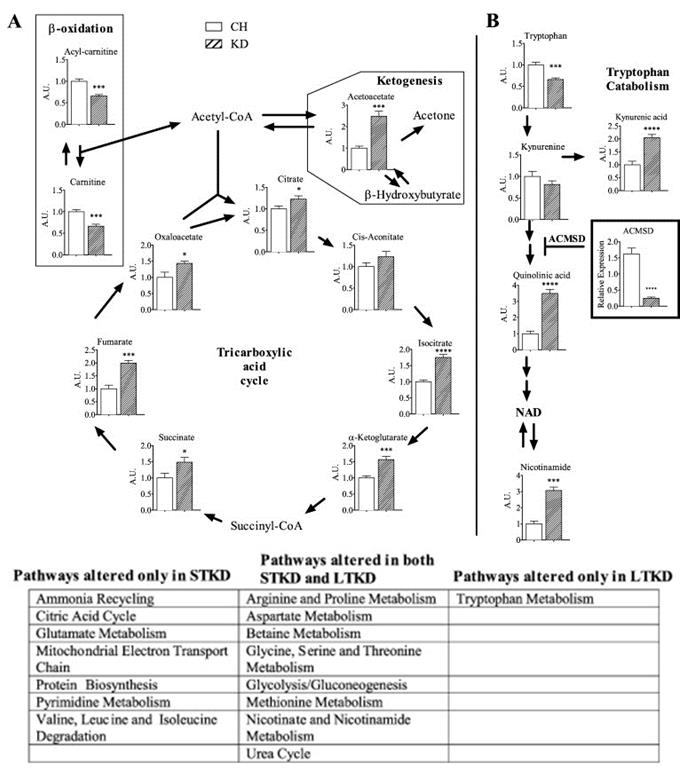
Difference in TCA cycle intermediates, B-oxidation, and tryptophan catabolism in keto-fed and chow-fed mice. Values expressed relative to chow-fed mice.

Ketogenic diets (KD) have become a growing interest for weight loss, exercise performance, and health. They are most well-known for their use in the treatment of refractory epilepsy, particularly in children, which dates back to at least the 1920s and is more effective than most epileptic drug treatments. However, there is a concern over and lack of knowledge regarding long-term effects. For instance, a more serious side-effect of KD is growth retardation possibly owed to the very low protein intake, which may resolve via catch-up growth upon diet discontinuation. Given the methodological problems of conducting studies lasting years or decades, it is not that surprising that no research exists regarding long-term effects. However, this knowledge is of clinical importance. Thus, to help further our understanding of the physiologic consequences of KD on systemic health, longevity, and metabolism, Douris et al from the Harvard Medical School compared both the short-term effects of...


Continue reading
  4647 Hits

Super Human Roundup: Childhood screen time and academics, infant diets, hypertension, and overrated grains

Super Human Roundup: Childhood screen time and academics, infant diets, hypertension, and overrated grains

Obesity, screen time, and sedentariness predict lower academic achievement in children Antonio Garcia-Hermoso and Raquel Marina recently recruited 395 seventh-grade boys and girls from seven schools to estimate the relationship between weight, physical activity, screen time, and academic achievement. After adjusting for several confounding variables, they found that boys and girls with obesity had worse grades than their leaner peers and that kids who had more than 2-hours of screen time daily had worse grades independent of weight status and physical activity. These associations only became stronger when variables were combined. Both boys and girls who were obese, with low–medium physical activity and exceeded recommended screen time were less likely to earn high academic achievements than their counterparts who were non-obese, with high physical activity and met screen time recommendations, independent of potential confounders. Have you ever wondered what infants in the U.S. eat? To say good nutrition during infancy is...

Continue reading
  1644 Hits

Reanalysis confirms, more protein maximizes fat loss in overweight adults

Reanalysis confirms, more protein maximizes fat loss in overweight adults
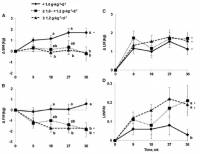
Changes in bodyweight (A), fat mass (B), lean-body mass (C), and the lean to fat mass ratio (D) every 9 weeks throughout the intervention. *Significantly different from zero (i.e., the change from before to after the intervention is significant). Values without a common letter are significantly different.
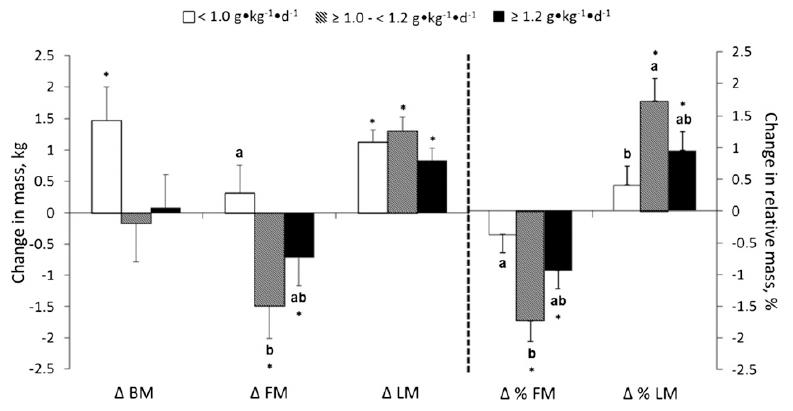
The changes in BM, FM, LM, %FM, and %LM; * significantly different from zero (i.e., the change from before to after the intervention is significant). Values without a common letter are significantly different.

In 2012, researchers from Purdue University published a study suggesting that increasing total protein intake through whey protein supplementation was not effective in enhancing exercise-induced improvements in body composition and indices of metabolic syndrome in middle-aged overweight and obese adults. In this double-blind, randomized, placebo-controlled, community-based study, 220 inactive adults [about half of which had metabolic syndrome (MetS)] completed a 9-month resistance training (2 d/wk) and aerobic training (1 d/wk) exercise program that ultimately led to increases in whole-body strength and VO2max and an increase in lean-body mass (LBM) and reduction in fat mass (FM) despite no bodyweight change. However, during this intervention period, the participants were also instructed to consume a 200 kcal sachet twice daily with breakfast and lunch that contained 0, 10, 20, or 30 g whey protein (total daily supplemental dose 400 kcal and 0, 20, 40, and 60 g whey, respectively), which had no impact on...

Continue reading
  1777 Hits

There is more to deliciousness than just food on the plate

There is more to deliciousness than just food on the plate

'Canteen' cutlery on the left; 'banquet' cutlery on the right

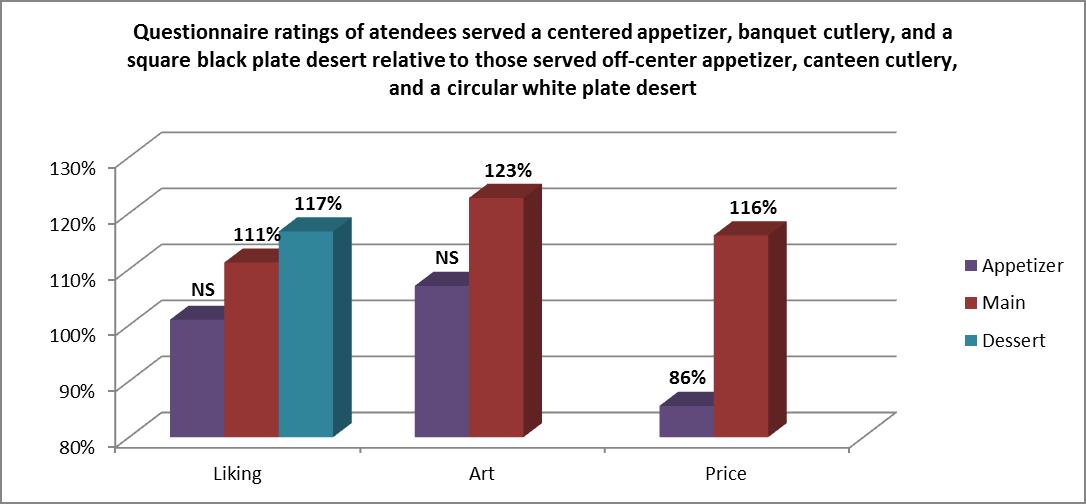
Plating is the art of making food look good. Obviously the organoleptic properties play a fundamental role in determining how much we like eating something, but our food experiences are also influenced by the visual and structural arrangement of the plate. Now, new research published in Flavour by researchers from the University of Oxford extends this influence to the cutlery we use to eat. The goal of the researchers was simple: invade an international conference being held at the Sheraton Grand hotel in Edinburgh and determine how minute changes to the appetizer, main course, and desert influenced the attendees’ perceived liking of the dish. How did they do this? They put a pink or green score sheet on each table and gave orders to the wait staff to set the tables and serve dishes a certain way. Aside from that, all food eaten by the attendees was exactly the same. AppetizerPloughmans, ham...

Continue reading
  1446 Hits

Super Human Roundup: Iron a double-edged sword, fat and microRNA, and rock climbing strength

Iron and metabolic syndrome; a shield for women and sword for men In an analysis of 3,271 Swiss men and women, Kilani et al found a significant relationship between serum transferrin levels and increased risk of metabolic syndrome (MetS) in men only, whereas serum iron was found to be significantly protective against MetS in women. Ferritin showed no associations with either sex. Although causality cannot be determined, two mechanisms have been proposed. The first is that MetS leads to increased inflammatory status that leads to changes in iron homeostasis. The second is that elevated transferrin leads to MetS through a complex web of mechanisms beginning with excessive formation of reactive oxygen species and ending with insulin resistance and related comorbidities. It’s the little things MicroRNAs (miRNAs) are small noncoding RNAs that have the ability to control multiple genes and govern remote bodily processes through intertwined pathways. Researchers from the University of...

Continue reading
  1587 Hits
SHR Logo

Super Human Radio is the world's longest running broadcast dedicated to health, fitness & anti-aging with an emphasis on exercise, nutrition, and hormone management. This one of the most progressive podcasts for preventative & regenerative techniques designed to increase longevity. More

2908 Brownsboro Rd Ste 103
Louisville, Kentucky 40206

(502)-690-2200

SHR Logo

Super Human Radio is the world's longest running broadcast dedicated to fitness, health, and anti-aging with emphasis on exercise, nutrition, and hormone management. The most progressive source of information for preventative & regenerative techniques... More

2908 Brownsboro Rd Ste 103
Louisville, Kentucky 40206
United States of America

+1 502-690-2200