• +1 502-690-2200
  • This email address is being protected from spambots. You need JavaScript enabled to view it.

Super Human Roundup: Diet but not genetics matter when it comes to visceral fat, diabetics may be exercise resistant, and nuts are great for the waist line

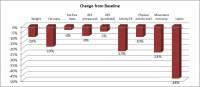
Diet quality matters In the lead article of the latest issue of Nutrition Reviews, Karina Fischer et al. from the University of Bonn, Germany set out to systematically review the results of observational and controlled intervention studies evaluating the relations between qualitative aspects of diet and measures of visceral (VAT) and subcutaneous (SAAT) adipose tissue in healthy adults or adolescents. Overall, 20 observational and 23 intervention studies were reviewed, and it was determined that a 7-22% change in VAT and 2-14% change in SAAT could be expected with controlled changes in the qualitative aspects of an individual’s diet. However, SAAT may be mainly affected by the energy component associated with a particular qualitative aspect of diet. You can’t blame genetics for a beer-belly Tyler Bosch et al. had previously published research of twins indicating that the sex-specific thresholds for body fat at which visceral fat (VAT) begins to accumulate rapidly were...
Continue reading
  1482 Hits

Leptin research update: It’s not just the weight loss but the dieting that suppresses leptin, and leucine may be the hero


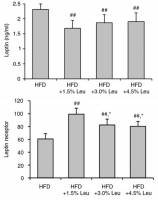
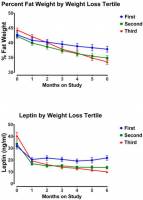
Energy restriction and weight loss lead to several fundamental changes in physiology that make weight regain easy and continued dieting more difficult. A lot of it comes down to the p-ratio of the dieting individuals, but one hormone that is central to the puzzle is leptin. That is because leptin levels decline both during dieting and after there is a return to caloric maintenance regardless of the weight-loss protocol. The suppression post-dieting is one aspect that makes maintaining a lower body weight so difficult. Interestingly, administration of exogenous leptin during this time has been shown to reverse the reduction in energy expenditure, the reduction in neuromuscular adaptations, and the increased food-reward cues. This begs the question, to what extent does leptin influences these changes? The answer comes from the work of Stefan Camps at Maastricht University, the Netherlands. He and his colleagues recruited 82 obese but otherwise healthy middle-aged men and...

Continue reading
  3061 Hits

Super Human Roundup: Exercise good for children, eating cholesterol raises cholesterol, and we know nothing about bioactives

Testing protocol

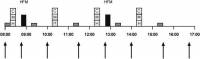
Exercise throughout the day is healthy for children!... We need research to tell us this? I would be flabbergasted (awesome word) to find someone who thinks exercise throughout the day isn’t healthy, but at least now we have research documenting it. Nineteen 13-14 year old boys and girls visited the laboratory on four difference occasions where they completed in a randomized order: (1) two, 1 minute intervals at 90% VO2max, separated by 75 seconds of rest (HIIE); (2) ~ 6 min of cycling at 90% GET (MIE); or (3) remained seated and watched TV (control; CON). The exercise bouts were repeated four times, each separated by two hours, and on two occasions the adolescents consumed a milkshake providing 19 kcal/kg bodyweight (75% FAT, 25% CHO, 5% PRO). The exercise protocols had absolutely no effect on post-prandial levels of triglycerides, suggesting that neither high- nor medium-intensity exercise can save a kid from a fat bomb. However,...

Continue reading
  1527 Hits

Replacing saturated with unsaturated fat improves blood lipids, blood pressure, and cardiovascular disease risk without affecting the vasculature


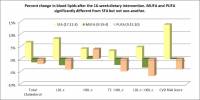
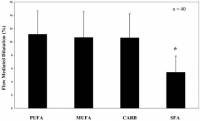
It was recently reported by an updated Cochrane Review that reducing saturated fat intake lowered the risk of having a heart attack without affecting the risk of dying from one. These effects were most pronounced when the saturated fat (SFA) was replaced by linoleic acid (PUFA), but there was surprisingly no observable benefit of replacement with monounsaturated fats (MUFA). However, the trials included in this meta-analysis were primarily interventions where only dietary advice was given to the participants who were then followed for some time, and the majority of participants were those who were at a high-risk of cardiovascular disease (CVD) and/or already had a heart attack. Thankfully, researchers from the University of Reading, UK recently published findings from the DIVAS study that should help shed some light on the issue of fat quality and CVD. The DIVAS study was a 16-week 195-person intervention in which the participants were randomized to...

Continue reading
  2330 Hits

Super Human Roundup: Siblings make you fat, more useless “healthy” microbe knowledge, and the Western lifestyle eroding Inuit health

Are siblings to blame for body composition? This is a question that pondered in the minds of researchers from Brazil, who used data from a birth cohort in 1993 to evaluate the how the number of siblings in a family was related to body composition. Ultimately, 5249 mothers agreed to participate, and their children were assessed at ages 4, 6, 9, 11, 13 and 18 years with the Bod Pod. After adjustment for possible confounding variables, there was a significant association between the number of siblings and fat mass in both boys and girls, while only in girls was muscle mass was associated with sibling number. Boys who had more siblings were less fat and had a lower BMI, while girls with more siblings had less fat and more muscle. What are the “healthy” and “unhealthy” microbes? The human gut is home to trillions of microbes that outnumber the cells in...

Continue reading
  1479 Hits
SHR Logo

Super Human Radio is the world's longest running broadcast dedicated to health, fitness & anti-aging with an emphasis on exercise, nutrition, and hormone management. This one of the most progressive podcasts for preventative & regenerative techniques designed to increase longevity. More

2908 Brownsboro Rd Ste 103
Louisville, Kentucky 40206

(502)-690-2200

SHR Logo

Super Human Radio is the world's longest running broadcast dedicated to fitness, health, and anti-aging with emphasis on exercise, nutrition, and hormone management. The most progressive source of information for preventative & regenerative techniques... More

2908 Brownsboro Rd Ste 103
Louisville, Kentucky 40206
United States of America

+1 502-690-2200