
• +1 502-690-2200
  • This email address is being protected from spambots. You need JavaScript enabled to view it.

Eggs & diabetes – where do we stand?

Eggs & diabetes – where do we stand?
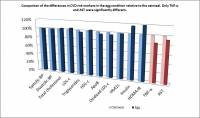
Comparison of the differences in CVD risk markers for the egg and oatmeal conditions. Only TNF-alpha and AST were significantly different.

The American Diabetes Association (ADA) recommends that individuals with type-2 diabetes (T2D) limit their cholesterol intake to less than 300 mg per day. A single large egg contains about 200 mg. Their rationale is that there is limited research regarding optimal dietary cholesterol intake, and go on to reference the Nurses' Health Study that found a 37% increase in cardiovascular disease (CVD) risk in women for every 200 mg of cholesterol per 1000 kcal consumed. Two meta-analyses appear to support this recommendation; one showed that individuals with T2D who ate eggs more than once per day were 69% more likely to develop CVD comorbidity than those who ate eggs less than once per week, while the other showed that, for each 4/week increment in egg intake, the risk of CVD increased by 40%. Pretty scary stuff, isn’t it? At the same time, oatmeal is recognized as a “heart-healthy” food and has...
Continue reading
  2455 Hits

To peanut or not to peanut?

To peanut or not to peanut?

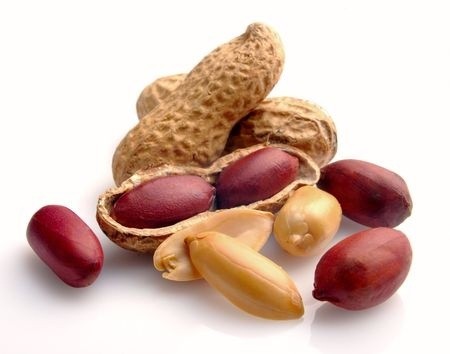
A question that I am frequently asked is whether peanuts are “okay” or “safe” to eat. The question usually stems from someone who enjoys peanut butter (and there is no replacement, let’s be honest) but has read a lot of conflicting information on the internet and doesn’t know what to think. The idea that peanuts are unhealthy for those without a peanut allergy stems from the canonical paleo diet concept that legumes should be avoided because (1) they aren’t part of our ancestral diet, and (2) they contain toxic anti-nutrients such as lectins and phytic acid.

I’m not going to spend time debating the legume issue because I personally don’t find it very relevant. To me it is a red herring that is brought up by individuals who don’t have an answer specific to peanuts. Moreover, it is a vast overgeneralization to say that one particular legume is unhealthy because some may be harmful. This idea is easily illustrated with simple reduction ad absurdum. If peanuts are unhealthy because they are a legume and some legumes may be harmful, then it would be equally as valid to claim that olive oil is unhealthy because it is a fat and some fats (e.g. trans-fats) may be harmful. Similarly, perhaps we should avoid eating mushrooms altogether because there are some toxic varieties.

Continue reading
  7538 Hits

Super Human Roundup: Protein and fish oil for the old, apples and oatmeal for the young, and 3 eggs or nothing because 1.5 doesn’t cut it

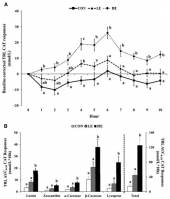
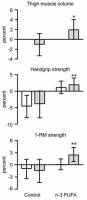
Changes in thigh muscle volume, handgrip strength, and 1-RM muscle strength in the n-3 PUFA and control groups.
Total carotenoid content of the blood lipoproteins  for the ten hours after eating a salad (control) with 1.5 eggs (LE) or 3 eggs (HE).

Every day new research is published and the unfortunate truth is that it would be impossible for me to write an article on everything I come across. Plus, in all fairness, not every study deserves a full article. Therefore, I decided to write a weekly Super Human Roundup series that briefly touches on some of the research I can’t or don’t want to address in length. This way you don’t miss out on anything that may interest you. Sahni et al. from Harvard Medical School was interested in understanding the role of dietary protein on muscle mass and strength in older adults. They looked at data on over 2600 men and women from the Framingham Offspring Study who had valid dietary assessments and measurements of quadriceps strength and body composition (DXA). The subjects averaged 60 years of age and statistical adjustments were made for age, height, total energy intake, physical activity,...

Continue reading
  1900 Hits

Animals – a central piece to the food security and agricultural sustainability puzzle

Animals – a central piece to the food security and agricultural sustainability puzzle

Recently, Lawrence Reynolds of North Dakota State University published an editorial in The Journal of Nutrition in which attention was brought to the challenges associated with feeding the world’s rapidly expanding population. Reynolds writing was a response to a viewpoint put forth late last year by Donald Kennedy of Stanford University, who correctly pointed out that only through agricultural innovation and increased efficiency of food production can we hope to feed a population that is expected to reach nine billion by 2050.

Continue reading
  3282 Hits

Preliminary research confirms that alternate day fasting for weight loss is safe and effective

Preliminary research confirms that alternate day fasting for weight loss is safe and effective

Fasting can take a variety of forms. One such is alternate day fasting (ADF) in which individuals do exactly as the name states, alternate fasting and feeding days. Although this originally encompassed not eating for the entire day and creating a roughly 36 hour fast from dinner one night to breakfast two days after, a more prudent version involves only fasting until dinner the following day, about 24 hours. This form of ADF has a strong track record for aiding weight loss and reducing cardiometabolic risk in normal-weight and overweight-obese persons alike. However, although compliance in these and other trials has been exceptional with few reported adverse effects, concerns about the safety of ADF have yet to be directly addressed.

Continue reading
  2876 Hits
SHR Logo

Super Human Radio is the world's longest running broadcast dedicated to health, fitness & anti-aging with an emphasis on exercise, nutrition, and hormone management. This one of the most progressive podcasts for preventative & regenerative techniques designed to increase longevity. More

2908 Brownsboro Rd Ste 103
Louisville, Kentucky 40206

(502)-690-2200

SHR Logo

Super Human Radio is the world's longest running broadcast dedicated to fitness, health, and anti-aging with emphasis on exercise, nutrition, and hormone management. The most progressive source of information for preventative & regenerative techniques... More

2908 Brownsboro Rd Ste 103
Louisville, Kentucky 40206
United States of America

+1 502-690-2200