• +1 502-690-2200
  • This email address is being protected from spambots. You need JavaScript enabled to view it.

Salt your fat if you want to eat more

Salt your fat if you want to eat more


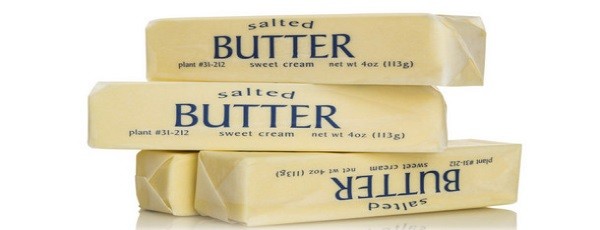
How would you define “junk food?” I have spent a bit of time pondering this question and my best definition is a highly palatable food high in salt, sugar, and/or fat. Clearly this doesn’t cover everything, but I would argue it encompasses most things people agree shouldn’t be dietary staples. Given my definition above, I was both surprised and joyful that Bolhuis et al from Deakin University recently published a study investigating what impact fat and salt, alone and in combination, have on appetite, food and energy intake, and food palatability. In a randomized crossover design, 48 healthy adults (16 men) completed 4 experimental trials in which they consumed a standardized breakfast followed by an all-you-can-eat lunch. The lunch consisted of elbow macaroni and tomato sauce made with 100% tomato passata (low-fat; LF) or 60% tomato passata, 30% canola oil, and 10% heavy cream (high-fat; HF). The sauce had no added...

Continue reading
  3739 Hits

Effect of mindfulness on weight loss

Effect of mindfulness on weight loss


When an obese individual loses weight, there is a good chance that maintaining weight loss will be a lifelong battle. Nonetheless, certain behaviors can influence weight maintenance success. For instance, drinking diet soda has been shown to be more effective than drinking water at not only promoting weight loss, but at keeping the weight off over one year. By contrast, the speed at which one loses weight does not appear to influence weight loss maintenance. Another possible tool for dieters is mindfulness-based approaches to increase awareness in the moment and promote adaptive self-regulation. There is support for its use in improving maladaptive eating behaviors, such as binge eating and emotional eating, that can no doubt impede weight loss or cause weight gain. However, whether mindfulness can aid weight loss and weight loss maintenance was only recently investigated by Daubenmier et al from the University of California, San Francisco. Being Mindful… This...

Continue reading
  3489 Hits

Diet or exercise – what makes you hungrier?

Diet or exercise – what makes you hungrier?


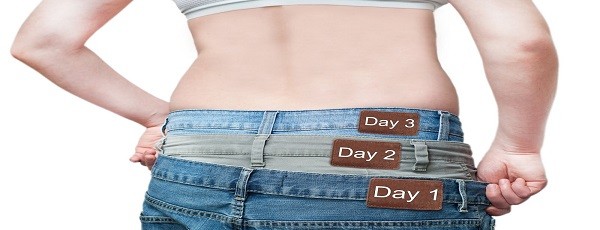
If your goal is to lose weight, then you need to create a caloric deficit. This can be done by reducing eating less calories or by increasing caloric expenditure via exercise (ignoring the complexities of the body and nutrition such as reducing caloric intake by replacing added fats with nuts). Of course, for weight loss to be successful, the intervention must be sustainable. This led Cameron et al to investigate how dieting alone or aerobic exercise alone differently affects appetite and appetite-related hormones, food hedonics and food reward, and olfaction. Ten young, healthy male volunteers were recruited to undergo three 3-day interventions (with a 2-week washout between each) in which each participant first completed a control condition, followed by a diet or exercise conditions (in random order, so some started with diet and others started with exercise). Thus, this was a crossover study with the sequence of testing being either CON-DIET-EX...

Continue reading
  2797 Hits

Weight regain may not depend on the rate of weight loss

Weight regain may not depend on the rate of weight loss


There are many strongly held views on obesity, some of which persist in the absence of scientific evidence to support them (presumptions), and some that are believed despite evidence to contradict them (myths). One of these views is that rapid weight loss is not sustainable and increases the likelihood of regaining all the lost weight. Whether this presumption should be classified as a myth was recently investigated by Vink et al from Maastricht University Medical Centre, The Netherlands. These researchers recruited 57 weight-stable, overweight-obese (BMI of 28-35) but otherwise healthy, middle-aged Caucasian men and women to undergo a three-phase intervention (figure 1). The first phase was the weight loss (WL) phase, whereby participants were randomly assigned to either the low calorie diet (LCD; slow weight loss) or very-low calorie diet (VLCD; rapid weight loss) group, both of which aimed for a weight loss of about 10% starting bodyweight. Accordingly, the WL...

Continue reading
  3010 Hits

Can 4 days of paleo benefit health?

Can 4 days of paleo benefit health?

According to the abstract of Freese et al’s latest study, “returning to our Paleolithic roots may have positive effects on risk factors commonly associated with metabolic disorders.” This conclusion is based on the data obtained from sending 13 healthy men and women into a National Park for 4 days and 3 nights. The goal was to return them to a “metaphorical paleolithic hunter-gatherer condition of living.” Accordingly, they lived and slept outdoors with no shelter. And just like all other hunter-gatherer tribes before them, water was available every morning from a nearby holiday apartment. Food was also provided to the participants, including a morning ration of fruit, nuts, and tubers alongside instructions not to eat before noon, and “paleo meals” supplied at night. At the end of the 4-day intervention, the participants showed significant reductions in fasting glucose (-18%), fasting insulin (-50%), and HOMA-IR (-58%; proxy for insulin resistance), as well...

Continue reading
  2578 Hits
SHR Logo

Super Human Radio is the world's longest running broadcast dedicated to health, fitness & anti-aging with an emphasis on exercise, nutrition, and hormone management. This one of the most progressive podcasts for preventative & regenerative techniques designed to increase longevity. More

2908 Brownsboro Rd Ste 103
Louisville, Kentucky 40206

(502)-690-2200

SHR Logo

Super Human Radio is the world's longest running broadcast dedicated to fitness, health, and anti-aging with emphasis on exercise, nutrition, and hormone management. The most progressive source of information for preventative & regenerative techniques... More

2908 Brownsboro Rd Ste 103
Louisville, Kentucky 40206
United States of America

+1 502-690-2200