
• +1 502-690-2200
  • This email address is being protected from spambots. You need JavaScript enabled to view it.

Paleo in practice – a review of the research

Paleo in practice – a review of the research
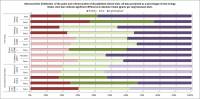
Summary of dietary macronutrients
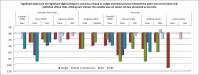
Summary of changes in weight and blood pressure.
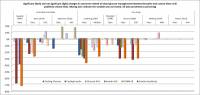
Summary of changes in blood glucose regulation
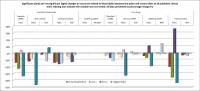
Summary of changes in blood lipids.

Let there be no ambiguity, I do not agree with every aspect of the paleo diet. But this does not mean that I am against it. I believe that the paleo diet lays out very simple guidelines that virtually any person can follow with ease, and this in turn serves as an excellent starting point – “blank slate” or “template” if you will – from which a person can experiment and find what works best for their individuality. There is certainly no shortage of anecdotal testimonials to support the notion that “switching to” a paleo diet benefits health and wellbeing, but many of the claims are incredibly hyperbolic and there is literally no way for anyone to know if this was owed to the paleo diet, per se. This is why research exists – to build and organize knowledge in the form of testable explanations and predictions. So what can we...

Continue reading
  3408 Hits

Super Human Roundup: Heart disease special – a look the impact of eating more vegetables, less saturated fat, more vitamin C, and almonds

Eating more veggies doesn’t help those at risk for heart attacks. It is probably one of the most ubiquitous nutrition recommendations in existence – eat more vegetables. Only recently have researchers from Ireland actually put this to the test in overweight-obese men and women. All 89 of the participants were habitual low-veggie consumers with no outstanding medical history other than a blood lipid panel that put them at a high risk for heart disease. Over a 4-week run-in period, all participants consumed <2 servings of vegetables per day (1 serving = 80g), after which they were randomly allocated to consume 2, 4, or 7 portions per day for the following 12 weeks. There were literally no changes in any outcome, including body composition, blood lipids, blood pressure, or C-reactive protein. Reducing saturated fat consumption may reduce the risk of having a heart attack, but it won’t protect you from dying from...

Continue reading
  1984 Hits

Super Human Roundup: Weight loss programs, frequent self-weighing, and cholesterol differences among men and women; we are not the same

Super Human Roundup: Weight loss programs, frequent self-weighing, and cholesterol differences among men and women; we are not the same

Should weight loss and maintenance programs be designed differently for men?

In the recently published systematic review from the journal Obesity Research & Clinical practice, Clare Robertson and colleagues sought to answer this very question. They included 22 randomized controlled trials of obese men and women where outcome data was presented separately by sex in each trial and had a duration and/or follow-up of at least one year. The majority of trials considered interventions for weight loss, rather than weight loss maintenance, but none were designed to directly address the research question: do men and women respond differently to weight loss interventions?

Continue reading
  1979 Hits

Eggs & diabetes – where do we stand?

Eggs & diabetes – where do we stand?
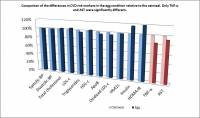
Comparison of the differences in CVD risk markers for the egg and oatmeal conditions. Only TNF-alpha and AST were significantly different.

The American Diabetes Association (ADA) recommends that individuals with type-2 diabetes (T2D) limit their cholesterol intake to less than 300 mg per day. A single large egg contains about 200 mg. Their rationale is that there is limited research regarding optimal dietary cholesterol intake, and go on to reference the Nurses' Health Study that found a 37% increase in cardiovascular disease (CVD) risk in women for every 200 mg of cholesterol per 1000 kcal consumed. Two meta-analyses appear to support this recommendation; one showed that individuals with T2D who ate eggs more than once per day were 69% more likely to develop CVD comorbidity than those who ate eggs less than once per week, while the other showed that, for each 4/week increment in egg intake, the risk of CVD increased by 40%. Pretty scary stuff, isn’t it? At the same time, oatmeal is recognized as a “heart-healthy” food and has...

Continue reading
  2455 Hits

Another reason your kid shouldn’t be fat – blood lipids

Another reason your kid shouldn’t be fat – blood lipids

The sad truth is that even our young – our children – can and do develop atherosclerosis. Cardiovascular disease (CVD) risk may be related to the degree of overweight-obesity, and cross-sectional research has provided preliminary insights into the links between blood lipid concentrations, physical activity (PA), cardiorespiratory fitness (CRF), and adiposity. However, cross-sectional data is also intrinsically limited by the fact that it is a snapshot of a single point in time comparing multiple groups on whatever the variable of interest is. Conversely, longitudinal data is collected over a period of time from the same cohort of subjects so as to detect changes in variables of interest.

Continue reading
  3572 Hits
SHR Logo

Super Human Radio is the world's longest running broadcast dedicated to health, fitness & anti-aging with an emphasis on exercise, nutrition, and hormone management. This one of the most progressive podcasts for preventative & regenerative techniques designed to increase longevity. More

2908 Brownsboro Rd Ste 103
Louisville, Kentucky 40206

(502)-690-2200

SHR Logo

Super Human Radio is the world's longest running broadcast dedicated to fitness, health, and anti-aging with emphasis on exercise, nutrition, and hormone management. The most progressive source of information for preventative & regenerative techniques... More

2908 Brownsboro Rd Ste 103
Louisville, Kentucky 40206
United States of America

+1 502-690-2200