• +1 502-690-2200
  • This email address is being protected from spambots. You need JavaScript enabled to view it.

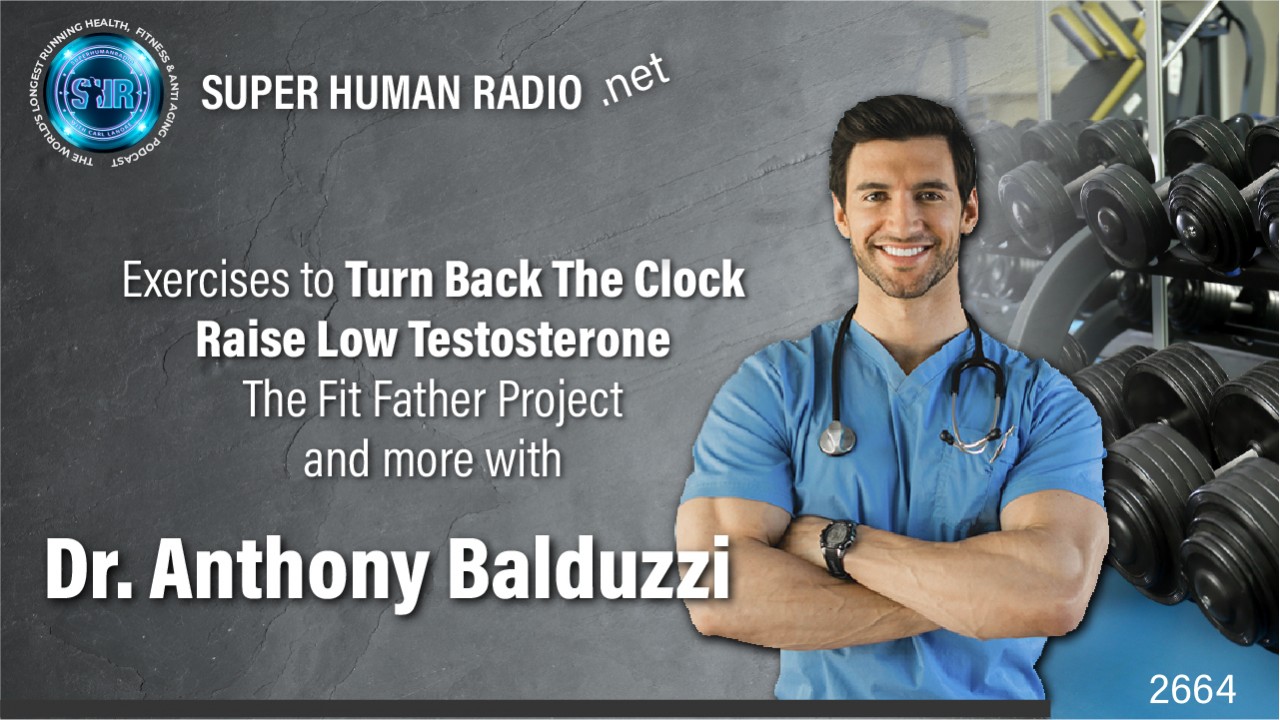
Turn Back The Clock, Raise Low Testosterone and more

2664P1-INTRO

Dr. Anthony Balduzzi Ph.D and former national champion bodybuilder, is the founder of the wildly popular 'Fit Father Project’ which blends physical culture and science based medicine. with focus on hormones, nutrition and exercise. An early interest in health and fitness stemmed from watching his own dad get very sick, working himself to the bone to put food on the table for the family which meant missing out on healthy eating, skipping exercise, eventually getting a cancer diagnosis, and passing away at 42. Anthony was nine at the time and it was devastating to the family. He began studying everything he could about nutrition, exercise, sleep, the immune system, how to build muscle, and eventually was propelled forward into fitness, competitive bodybuilding, and then medical school. The Fit Father project helps busy guys in their forties, fifties, and sixties achieve and manage sustainable health routines where they can lose the fat, extend their...


Continue reading
  1616 Hits

Yet another study on a truly high-protein diet (3.3 g/kg/day) – it’s safe in resistance-training males and you may lose a little fat

Yet another study on a truly high-protein diet (3.3 g/kg/day) – it’s safe in resistance-training males and you may lose a little fat


Dr. Jose Antonio has put out some truly novel research looking at high-protein diets. I’m not talking about the arbitrary 30% of calories that can vary widely depending on energy intake. Rather, I’m talking about grams per unit of bodyweight – as it should be. Previous research by Dr. Antonio had shown that taking a group of healthy resistance-training men and women and having them increase their protein intake from 2.3 to 4.4 g/kg (1 to 2 g/lb) had no effect on body composition. This study was followed up with another study that showed that consuming 3.4 g/kg (1.5 g/lb) had a more favorable effect on body composition than consuming 2.3 g/kg (1 g/lb) when combined with a structured resistance training program. This latter study also showed no signs of harmful effects from a basic metabolic panel. Now, Antonio et al have published the third study digging into this rabbit hole....

Continue reading
  4747 Hits

How much protein should I eat?

How much protein should I eat?
Christian Bale's 1-year transformation for
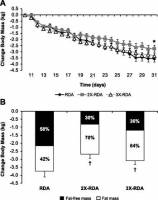
Changes in body composition in dieters (40% deficit) consuming 0.8 (RDA), 1.6 (2X-RDA), and 2.4 (3X-RDA) g/kg BW protein
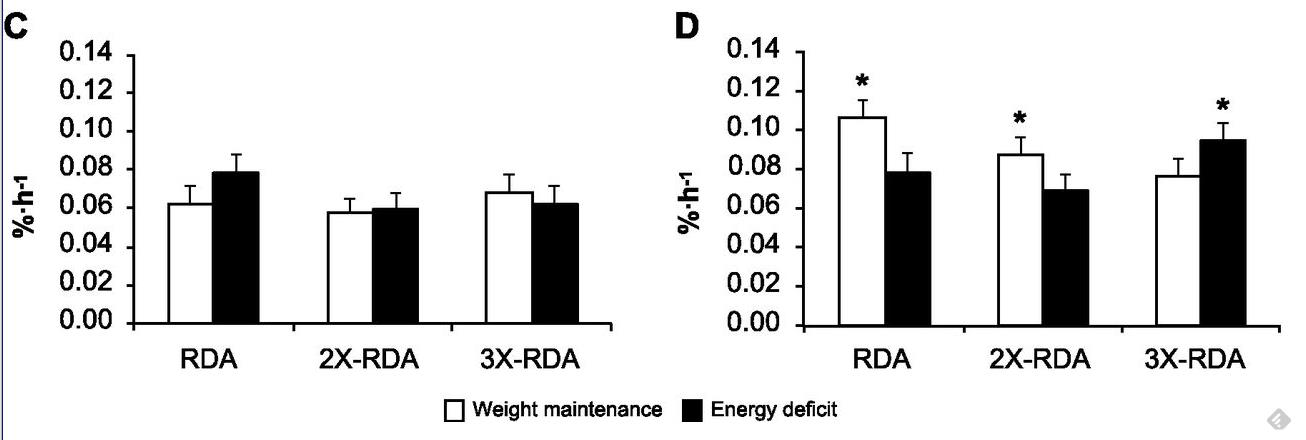
Postabsorptive (fasting) muscle protein synthesis (C) and postprandial muscle protein synthesis (D) responses to varying levels of dietary protein intake.
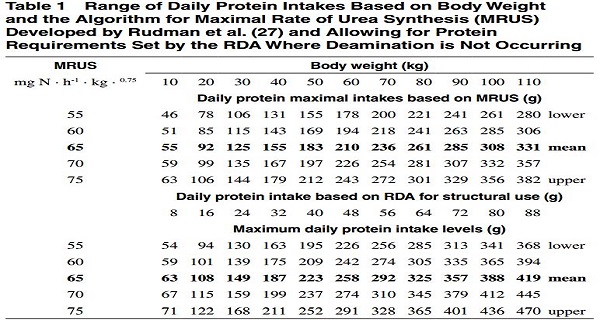
Range for theoretical protein intake at different bodyweights before toxicity would occur based on Rudman's work.

Protein is arguably the most important macronutrient we eat, and all the protein we accrue within the body is in the form of muscle, organs, and countless of other essential compounds. In fact, the typical human cell is roughly one-fifth protein by mass. Unlike carbohydrates and fat, there is no storage form of protein on the body that sits around waiting to be used – every single amino acid plays an important role in our wellbeing. Although it may not necessarily be healthy, the body can survive indefinitely without carbohydrate intake and for a very long time with little to no fat intake. On the other hand, insufficient protein intake leads to rapid death. Generally speaking, all tissues in the body are under a state of constant remodeling via protein breakdown and synthesis. These processes are distinct physiological pathways (not simply the reverse of one-another) and their relationship can be referred...

Continue reading
  8388 Hits

Super Human Roundup: Siblings make you fat, more useless “healthy” microbe knowledge, and the Western lifestyle eroding Inuit health

Are siblings to blame for body composition? This is a question that pondered in the minds of researchers from Brazil, who used data from a birth cohort in 1993 to evaluate the how the number of siblings in a family was related to body composition. Ultimately, 5249 mothers agreed to participate, and their children were assessed at ages 4, 6, 9, 11, 13 and 18 years with the Bod Pod. After adjustment for possible confounding variables, there was a significant association between the number of siblings and fat mass in both boys and girls, while only in girls was muscle mass was associated with sibling number. Boys who had more siblings were less fat and had a lower BMI, while girls with more siblings had less fat and more muscle. What are the “healthy” and “unhealthy” microbes? The human gut is home to trillions of microbes that outnumber the cells in...

Continue reading
  1479 Hits

Another reason your kid shouldn’t be fat – blood lipids

Another reason your kid shouldn’t be fat – blood lipids

The sad truth is that even our young – our children – can and do develop atherosclerosis. Cardiovascular disease (CVD) risk may be related to the degree of overweight-obesity, and cross-sectional research has provided preliminary insights into the links between blood lipid concentrations, physical activity (PA), cardiorespiratory fitness (CRF), and adiposity. However, cross-sectional data is also intrinsically limited by the fact that it is a snapshot of a single point in time comparing multiple groups on whatever the variable of interest is. Conversely, longitudinal data is collected over a period of time from the same cohort of subjects so as to detect changes in variables of interest.

Continue reading
  3572 Hits
SHR Logo

Super Human Radio is the world's longest running broadcast dedicated to health, fitness & anti-aging with an emphasis on exercise, nutrition, and hormone management. This one of the most progressive podcasts for preventative & regenerative techniques designed to increase longevity. More

2908 Brownsboro Rd Ste 103
Louisville, Kentucky 40206

(502)-690-2200

SHR Logo

Super Human Radio is the world's longest running broadcast dedicated to fitness, health, and anti-aging with emphasis on exercise, nutrition, and hormone management. The most progressive source of information for preventative & regenerative techniques... More

2908 Brownsboro Rd Ste 103
Louisville, Kentucky 40206
United States of America

+1 502-690-2200