
• +1 502-690-2200
  • This email address is being protected from spambots. You need JavaScript enabled to view it.

Cardio-protective effects of fish are not owed entirely to fish oils

Cardio-protective effects of fish are not owed entirely to fish oils
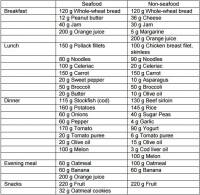
Sample daily menu of experimental diets
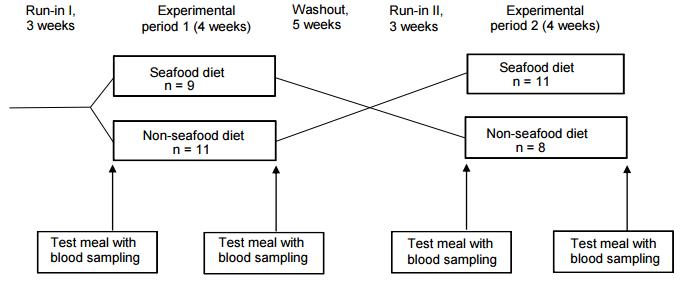
Experimental protocol
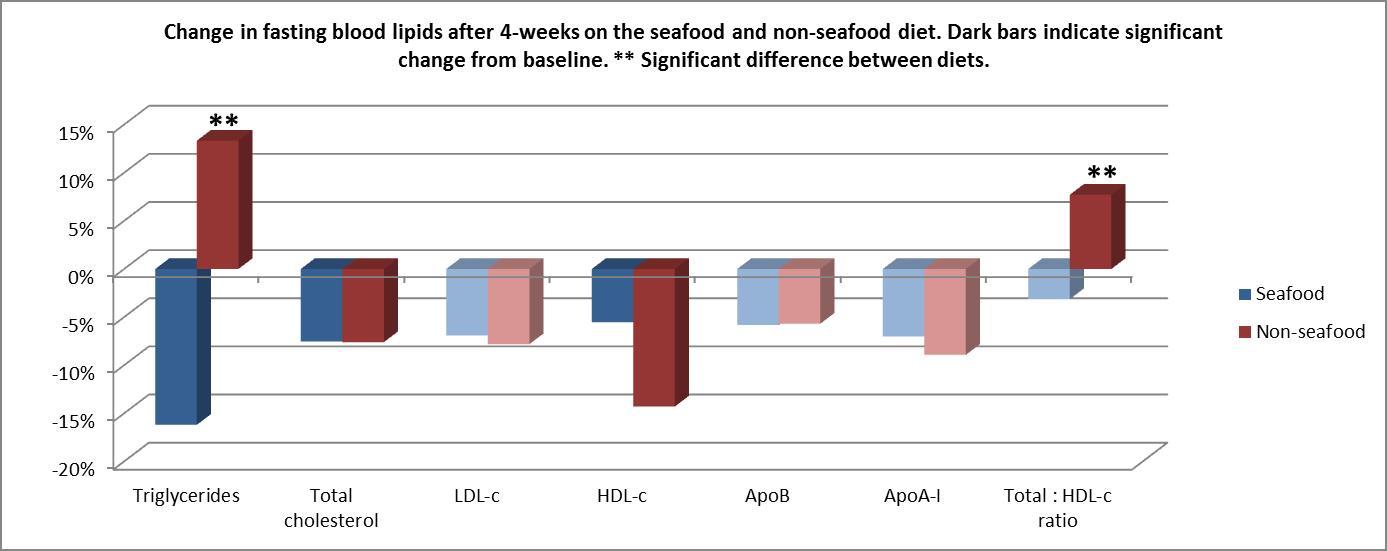
Cardio-protective effects

Fish and fish oils are one of the few foods that appear to be universally accepted as healthy, and a massive analysis of all published meta-analyses and systemic reviews from 1950 to 2013 found fish consumption to be one of the most protective food groups against all diet-related chronic diseases, especially cardiovascular disease (CVD). Much of the focus has, however, been on fish oils and the fatty fish that contain them in appreciable quantities. But what if there are other aspects to fish that make it beneficial? Preliminary findings have suggested, for example, that the addition of fish gelatin to a fish oil supplemented diet enhances the cardioprotective effects. To answer this question, researchers from the National Institute of Nutrition and Seafood Research, Norway, recruited 19 healthy middle-aged Caucasian men and women from the local area to participate in a crossover design RCT comparing identical diets differing only in their primary...


Continue reading
  2001 Hits

More Evidence of the Importance of How You Get Your Vitamin D

More Evidence of the Importance of How You Get Your Vitamin D


This is right from the Vitamin D Council website.... While the article is titled "New trial suggest Vitamin D improves quality of life markers in healthy women" when you go to the paper cited it shows that they were really looking for the cardiometabolical protective effects of Vitamin D which are seen in population with high sun exposure... and the study failed to show any. The Vitamin D Council summary of the article states the following in contrast to the headline  "Many observational studies have noted that people with more sun exposure have better cardiovascular health. This includes a more favorable lipid profile, lower blood pressure, and better insulin sensitivity. These benefits have been attributed to increased vitamin D production, but randomized controlled trials (RCT) have had conflicting results regarding the effects of vitamin D supplementation on cardiovascular markers."     Could this be because the RCT's use Vitamin D administered...

Continue reading
  3628 Hits

Statins strike again! Reductions in serum DHA evident with short-term use

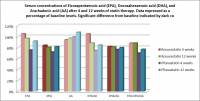
Serum changes from baseline in EPA, DHA, and AA.

Statins are quickly becoming the front-line method for primary prevention of cardiovascular disease (CVD) due to their outstanding ability to reduce LDL-cholesterol levels, and the most recent Cochrane Review indicates that statins are effective at reducing all-cause and CVD mortality. Of particular concern, however, was the fact that all trials were either fully or partially funded by pharmaceutical companies (five by Bristol Myers and Squibb, three by Pfizer, four by Astra-Zeneca, two by Merck and one by Bayer, one by Bayer and Merk, one by Pfizer, and the remaining by Sankyo Co Ltd). Moreover, the reporting of adverse events in these trials was generally poor, with failure to provide details of severity and type of adverse events or to report on health-related quality of life. There really is no doubt that statins are effective at doing what they were designed to do – lower LDL-cholesterol. However, statins don’t target LDL-c directly;...

Continue reading
  2201 Hits

Olive oil healthier than butter, even when refined and especially when pure

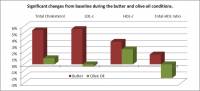
Changes from baseline in blood cholesterol on diet containing 4.5% of calories as butter or refined olive oil.
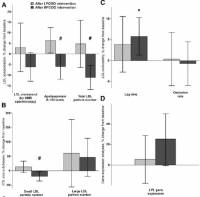
Changes from baseline values of (A) directly measured LDL concentrations, (B) LDL size distribution, (C) LDL oxidizability, and (D) LPL gene expression. * Significantly different from baseline. # Significantly different from LPCOO intervention.

Dairy fat is a complicated topic because it is typically around 70% saturated fat but shows very inconsistent effects on blood lipids and cardiovascular disease (CVD) risk. However, if we narrow things down farther from dairy fat and focus on the foods which contain it, there is a lot of evidence from randomized controlled trials that diets high in saturated fat derived largely from butter fat increases LDL-c, whereas cheese intake results in lower LDL-c compared with butter of equal fat content. However, every trial showing these effects has used very high amounts of butter. For instance, one study replaced 13% of the subject’s caloric intake with butter, which corresponded to an average of 50 grams (almost one-half of a stick) of butter per day. In order to evaluate the effects of moderate butter consumption on CVD risk factors, Engel and Tholstrup from the University of Copenhagen, Denmark recruited 47 healthy...

Continue reading
  2823 Hits

Super Human Roundup: Diet but not genetics matter when it comes to visceral fat, diabetics may be exercise resistant, and nuts are great for the waist line

Diet quality matters In the lead article of the latest issue of Nutrition Reviews, Karina Fischer et al. from the University of Bonn, Germany set out to systematically review the results of observational and controlled intervention studies evaluating the relations between qualitative aspects of diet and measures of visceral (VAT) and subcutaneous (SAAT) adipose tissue in healthy adults or adolescents. Overall, 20 observational and 23 intervention studies were reviewed, and it was determined that a 7-22% change in VAT and 2-14% change in SAAT could be expected with controlled changes in the qualitative aspects of an individual’s diet. However, SAAT may be mainly affected by the energy component associated with a particular qualitative aspect of diet. You can’t blame genetics for a beer-belly Tyler Bosch et al. had previously published research of twins indicating that the sex-specific thresholds for body fat at which visceral fat (VAT) begins to accumulate rapidly were...

Continue reading
  1482 Hits

Replacing saturated with unsaturated fat improves blood lipids, blood pressure, and cardiovascular disease risk without affecting the vasculature


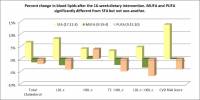
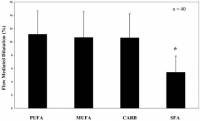
It was recently reported by an updated Cochrane Review that reducing saturated fat intake lowered the risk of having a heart attack without affecting the risk of dying from one. These effects were most pronounced when the saturated fat (SFA) was replaced by linoleic acid (PUFA), but there was surprisingly no observable benefit of replacement with monounsaturated fats (MUFA). However, the trials included in this meta-analysis were primarily interventions where only dietary advice was given to the participants who were then followed for some time, and the majority of participants were those who were at a high-risk of cardiovascular disease (CVD) and/or already had a heart attack. Thankfully, researchers from the University of Reading, UK recently published findings from the DIVAS study that should help shed some light on the issue of fat quality and CVD. The DIVAS study was a 16-week 195-person intervention in which the participants were randomized to...

Continue reading
  2330 Hits

Super Human Roundup: Heart disease special – a look the impact of eating more vegetables, less saturated fat, more vitamin C, and almonds

Eating more veggies doesn’t help those at risk for heart attacks. It is probably one of the most ubiquitous nutrition recommendations in existence – eat more vegetables. Only recently have researchers from Ireland actually put this to the test in overweight-obese men and women. All 89 of the participants were habitual low-veggie consumers with no outstanding medical history other than a blood lipid panel that put them at a high risk for heart disease. Over a 4-week run-in period, all participants consumed <2 servings of vegetables per day (1 serving = 80g), after which they were randomly allocated to consume 2, 4, or 7 portions per day for the following 12 weeks. There were literally no changes in any outcome, including body composition, blood lipids, blood pressure, or C-reactive protein. Reducing saturated fat consumption may reduce the risk of having a heart attack, but it won’t protect you from dying from...

Continue reading
  1984 Hits

To peanut or not to peanut?

To peanut or not to peanut?

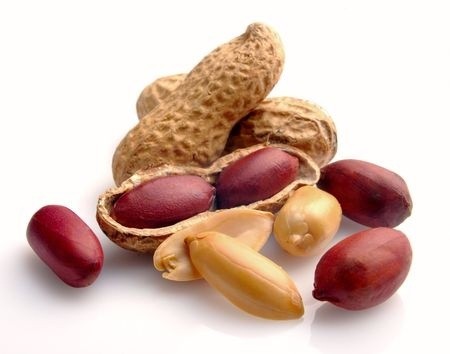
A question that I am frequently asked is whether peanuts are “okay” or “safe” to eat. The question usually stems from someone who enjoys peanut butter (and there is no replacement, let’s be honest) but has read a lot of conflicting information on the internet and doesn’t know what to think. The idea that peanuts are unhealthy for those without a peanut allergy stems from the canonical paleo diet concept that legumes should be avoided because (1) they aren’t part of our ancestral diet, and (2) they contain toxic anti-nutrients such as lectins and phytic acid.

I’m not going to spend time debating the legume issue because I personally don’t find it very relevant. To me it is a red herring that is brought up by individuals who don’t have an answer specific to peanuts. Moreover, it is a vast overgeneralization to say that one particular legume is unhealthy because some may be harmful. This idea is easily illustrated with simple reduction ad absurdum. If peanuts are unhealthy because they are a legume and some legumes may be harmful, then it would be equally as valid to claim that olive oil is unhealthy because it is a fat and some fats (e.g. trans-fats) may be harmful. Similarly, perhaps we should avoid eating mushrooms altogether because there are some toxic varieties.

Continue reading
  7538 Hits

Another reason your kid shouldn’t be fat – blood lipids

Another reason your kid shouldn’t be fat – blood lipids

The sad truth is that even our young – our children – can and do develop atherosclerosis. Cardiovascular disease (CVD) risk may be related to the degree of overweight-obesity, and cross-sectional research has provided preliminary insights into the links between blood lipid concentrations, physical activity (PA), cardiorespiratory fitness (CRF), and adiposity. However, cross-sectional data is also intrinsically limited by the fact that it is a snapshot of a single point in time comparing multiple groups on whatever the variable of interest is. Conversely, longitudinal data is collected over a period of time from the same cohort of subjects so as to detect changes in variables of interest.

Continue reading
  3572 Hits
SHR Logo

Super Human Radio is the world's longest running broadcast dedicated to health, fitness & anti-aging with an emphasis on exercise, nutrition, and hormone management. This one of the most progressive podcasts for preventative & regenerative techniques designed to increase longevity. More

2908 Brownsboro Rd Ste 103
Louisville, Kentucky 40206

(502)-690-2200

SHR Logo

Super Human Radio is the world's longest running broadcast dedicated to fitness, health, and anti-aging with emphasis on exercise, nutrition, and hormone management. The most progressive source of information for preventative & regenerative techniques... More

2908 Brownsboro Rd Ste 103
Louisville, Kentucky 40206
United States of America

+1 502-690-2200