
• +1 502-690-2200
  • This email address is being protected from spambots. You need JavaScript enabled to view it.

Why you may reconsider buttering your potato

Why you may reconsider buttering your potato


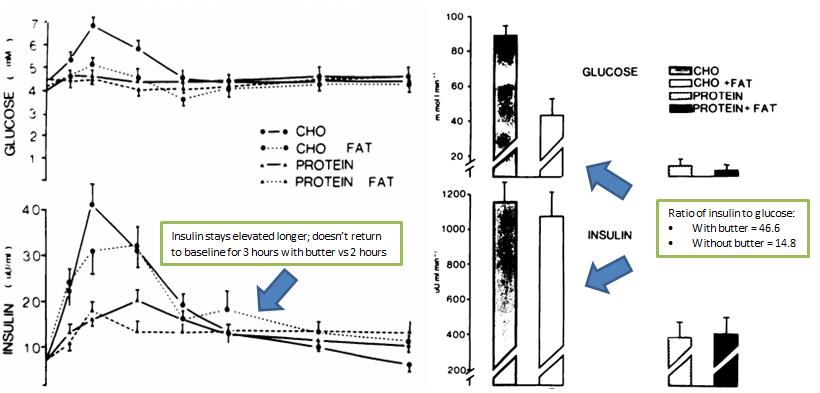
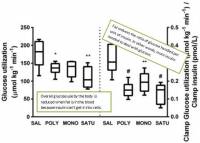
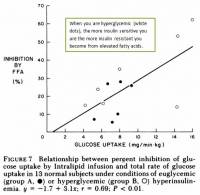
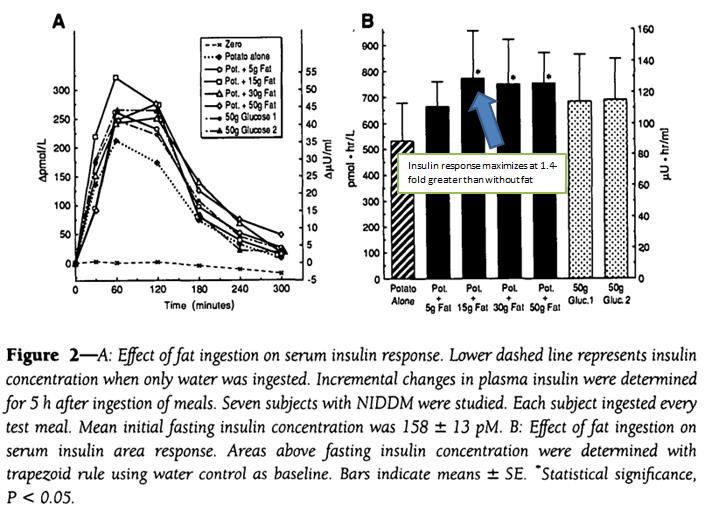
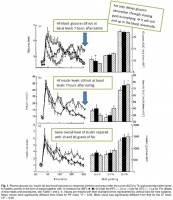
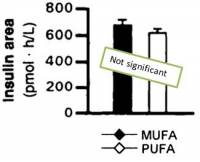
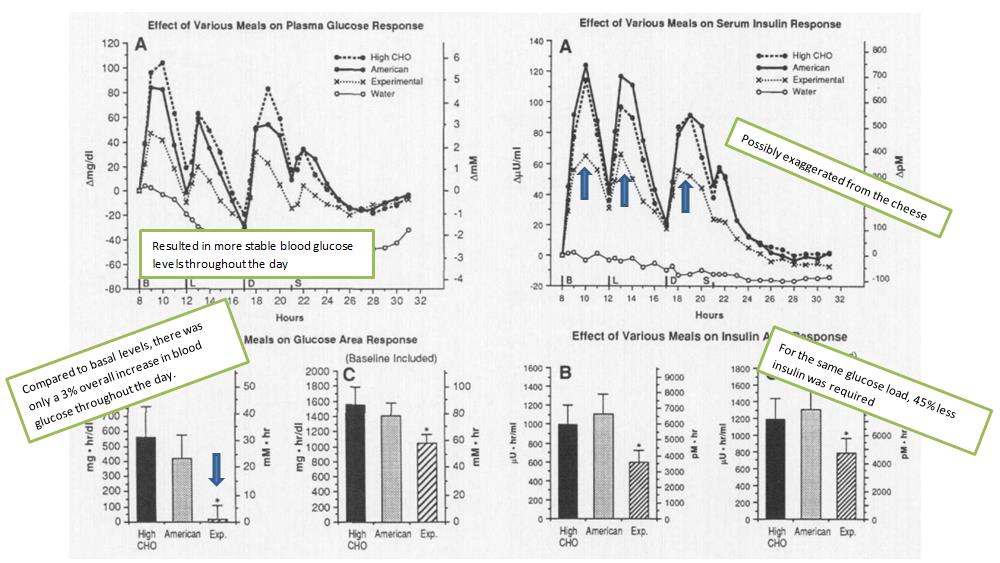
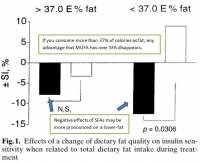
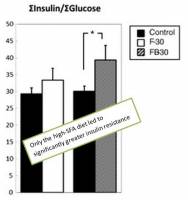
Adding fats to carbohydrate-containing meals is a common recommendation in dietetics to make meals “healthier” by reducing the glycemic response to the meal. The primary mechanism through which fat does this is by slowing the rate of gastric emptying, which leads to a slower appearance of glucose into the blood. Given that postprandial glycemia is an important risk factor for many diabetic complications, it makes complete sense to want to minimize post-meal blood glucose excursions. However, to focus solely on the blood glucose response of a meal misses the forest for the trees. There is a considerable amount of evidence to suggest that consuming starchy carbohydrates in combination with excessive dietary fat, especially saturated fat, causes an acute state of insulin resistance that may last for hours after the meal. This has been known since at least 1983, when Collier and O’Dea published research showing that adding butter to a potato...
Continue reading
  23412 Hits

Weekly beats daily for fish oil bioavailability

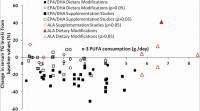
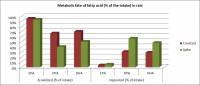
Metabolic fate of EPA, DPA, and DHA in rats.

There is a vast body of literature evaluating the health effects of fish oil and the quantity needed to benefit. Although therapeutic approaches can be taken, such as using high-doses of fish oil to battle fatty liver and reduce triglycerides, fish oil’s benefits generally come from balancing our body’s n-3/6 ratio. In this regard, many authoritative bodies have put out recommendations for EPA and DHA intake, either as a weekly or daily goal. To date, only two studies (here & here) have compared daily vs twice weekly supplementation of fish oil and found no difference when blood levels were used as a proxy for bioavailability. However, when referring to nutrients, bioavailability is used to describe how much of an orally administered nutrient is actually retained in the body after being digested and absorbed. According to Schuchardt and Hahn, LC n-3 FA can be detected in the blood in various forms. These include...

Continue reading
  2671 Hits

Statins strike again! Reductions in serum DHA evident with short-term use

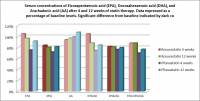
Serum changes from baseline in EPA, DHA, and AA.

Statins are quickly becoming the front-line method for primary prevention of cardiovascular disease (CVD) due to their outstanding ability to reduce LDL-cholesterol levels, and the most recent Cochrane Review indicates that statins are effective at reducing all-cause and CVD mortality. Of particular concern, however, was the fact that all trials were either fully or partially funded by pharmaceutical companies (five by Bristol Myers and Squibb, three by Pfizer, four by Astra-Zeneca, two by Merck and one by Bayer, one by Bayer and Merk, one by Pfizer, and the remaining by Sankyo Co Ltd). Moreover, the reporting of adverse events in these trials was generally poor, with failure to provide details of severity and type of adverse events or to report on health-related quality of life. There really is no doubt that statins are effective at doing what they were designed to do – lower LDL-cholesterol. However, statins don’t target LDL-c directly;...

Continue reading
  2201 Hits

Fish oil for fatty liver – round 2 PLUS a review of its lipid-lowering effects

Fish oil for fatty liver – round 2 PLUS a review of its lipid-lowering effects
Effects of omega-3s on serum triglycerides

In a previous article I wrote about one of the first clinical trials to evaluate the effect of DHA supplementation on indexes of fatty liver in adolescents. Needless to say, the results were quite impressive. But what if you don’t catch non-alcoholic fatty liver disease (NAFLD) quickly enough? Over time, oxidative stress, lipotoxicity, insulin resistance, and central inflammatory signaling pathways drive a transformation from NAFLD to the more serious condition called non-alcoholic steatohepatitis (NASH; literally “fatty inflammation”). At this point, would fish oils still help? If we trust the results of a recent double-blind, placebo-controlled, randomized clinical trial from Brazil, the answer is no! But there’s a catch. Fifty adult men and women with diagnosed NASH supplemented with three pills per day for six months before being readmitted for another liver biopsy to gauge any changes in liver health. What nobody knew (double-blind), was whether the pills supplied a mineral oil...

Continue reading
  2839 Hits

Fish oil for fatty liver?

Fish oil for fatty liver?
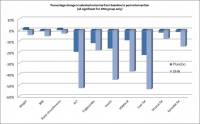
Percentage change from baseline to post-intervention in selected outcomes (all significant in the DHA group only)

Nonalcoholic fatty liver disease (NAFLD) is exactly what its name says – the abnormal accumulation of fat within the liver (steatosis for the nerds like me) from causes other than alcohol. The more severe form of NAFLD is called non-alcoholic steatohepatitis (NASH; literally “fatty inflammation”), which can eventually progress to cirrhosis, permanent liver damage, and cancer. Nonetheless, even simple NAFLD can cause widespread metabolic problems within the body, which should be no surprise considering the tremendous role the liver plays in detoxifying the body and managing nutrients. Anyway, NAFLD prevalence has been increasing over the past few decades and is currently estimated to be around 30% in the U.S. population, with causes ranging from excessive caloric intake and muscular insulin resistance to genetic abnormalities. We can’t really do anything about the genetics, but it is no coincidence that the only tried and true methods for reducing liver fat include weight loss...

Continue reading
  3241 Hits
SHR Logo

Super Human Radio is the world's longest running broadcast dedicated to health, fitness & anti-aging with an emphasis on exercise, nutrition, and hormone management. This one of the most progressive podcasts for preventative & regenerative techniques designed to increase longevity. More

2908 Brownsboro Rd Ste 103
Louisville, Kentucky 40206

(502)-690-2200

SHR Logo

Super Human Radio is the world's longest running broadcast dedicated to fitness, health, and anti-aging with emphasis on exercise, nutrition, and hormone management. The most progressive source of information for preventative & regenerative techniques... More

2908 Brownsboro Rd Ste 103
Louisville, Kentucky 40206
United States of America

+1 502-690-2200