
• +1 502-690-2200
  • This email address is being protected from spambots. You need JavaScript enabled to view it.

Why you may reconsider buttering your potato

Why you may reconsider buttering your potato


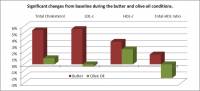
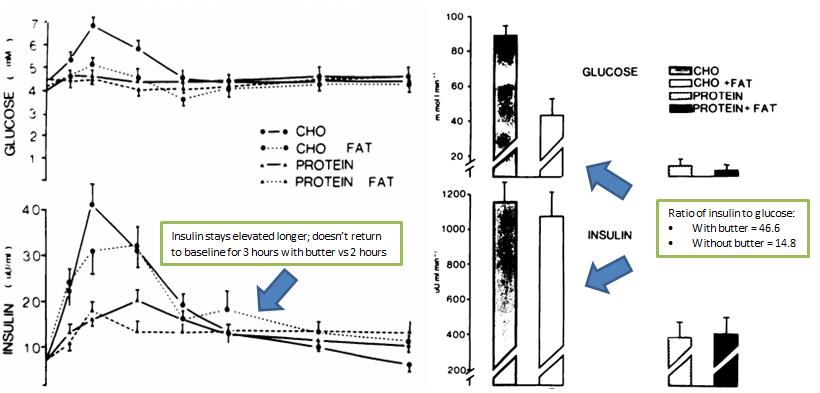
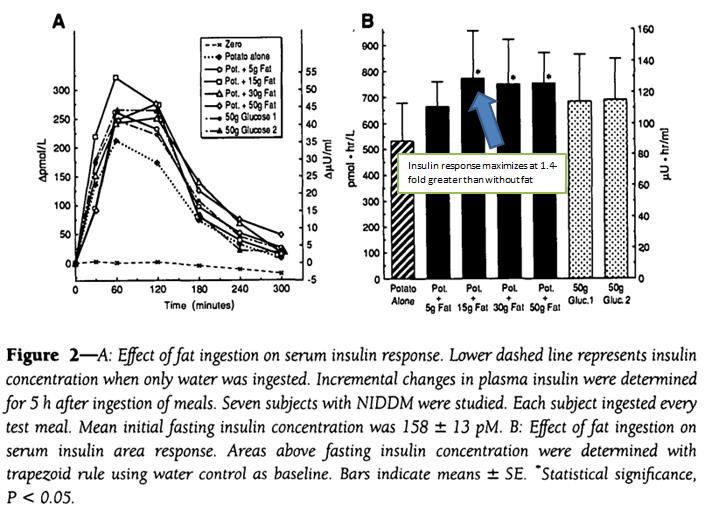
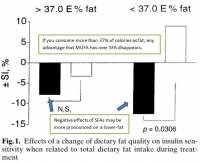
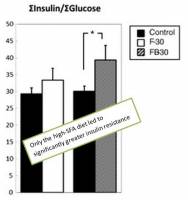
Adding fats to carbohydrate-containing meals is a common recommendation in dietetics to make meals “healthier” by reducing the glycemic response to the meal. The primary mechanism through which fat does this is by slowing the rate of gastric emptying, which leads to a slower appearance of glucose into the blood. Given that postprandial glycemia is an important risk factor for many diabetic complications, it makes complete sense to want to minimize post-meal blood glucose excursions. However, to focus solely on the blood glucose response of a meal misses the forest for the trees. There is a considerable amount of evidence to suggest that consuming starchy carbohydrates in combination with excessive dietary fat, especially saturated fat, causes an acute state of insulin resistance that may last for hours after the meal. This has been known since at least 1983, when Collier and O’Dea published research showing that adding butter to a potato...

Continue reading
  23412 Hits

Olive oil reduces postprandial glycemia and oxidative stress in healthy people eating a great lunch

Olive oil reduces postprandial glycemia and oxidative stress in healthy people eating a great lunch

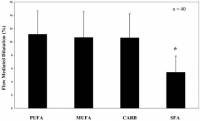
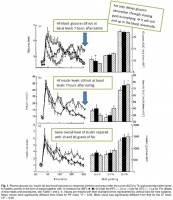
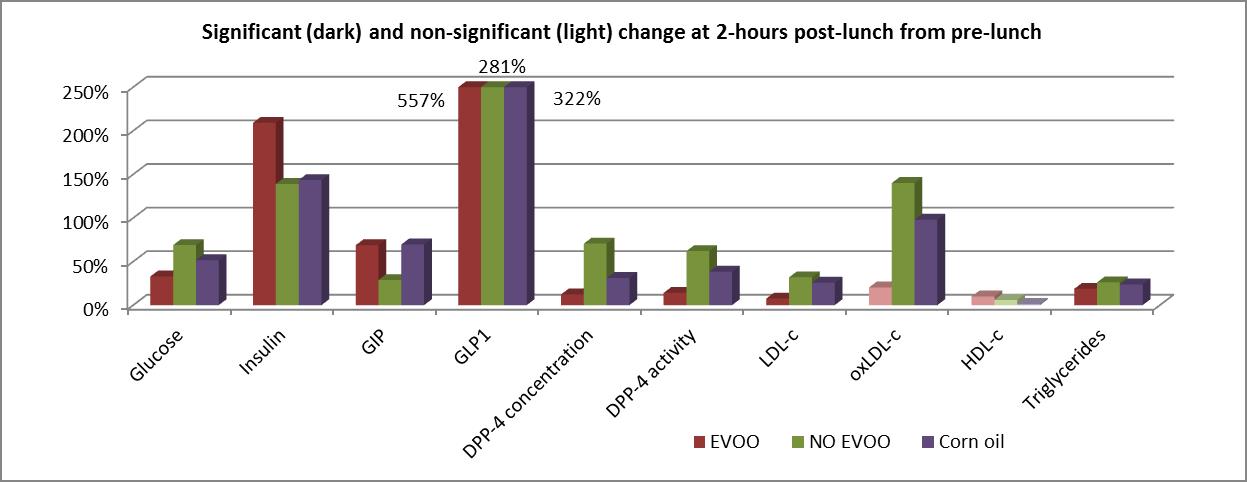
In previous articles, I wrote about a handful of studies that collectively demonstrated that consuming monounsaturated fat in place of saturated fat, even in small amounts, has beneficial effects on CVD risk factors, and that obtaining the monounsaturated fat from unadulterated whole-foods like unrefined olive oil and nuts can elicit even greater benefit through their secondary metabolites. However, these effects were obtained with chronic intake of at least one month and a largely uncontrolled for diet. This doesn’t downplay the health benefits by any means, but it does raise questions of whether these outcomes are observable within a single meal. To answer this, researchers from Sapienza University of Rome, Italy randomized 25 healthy male and female participants to consume a traditional Mediterranean lunch with or without 10g of extra virgin olive oil (EVOO) in a crossover design separated by 30 days. Compared to consuming the meal without EVOO, the small 10g...

Continue reading
  2228 Hits

Super Human Roundup: Olive oil and fiber for diabetes and the motivating factors and barriers to healthy eating in young men

Olive oil protective against type-2 diabetes in women That’s the conclusion of a recent paper by researchers from the Harvard School of Public Health who analyzed data of over 145,000 women from the Nurses’ Health Study I and II. After a 22-year follow-up, it was found that each additional 8 gram intake of olive oil was associated with a 6% reduced risk of developing type-2 diabetes, regardless of whether it was consumed as a salad dressing or added to food or bread. Additionally, replacing 8 grams of stick margarine, butter, or mayonnaise with 8 grams of olive oil was associated with a 5, 8, & 15 % predicted lower risk of T2D, respectively. Is soluble fiber protective against type-1 diabetes? A low-fiber diet has been associated with other inflammatory or autoimmune diseases such as colon cancer and irritable bowel syndrome, so why not type-1 diabetes as well? Soluble fibers may be...

Continue reading
  1560 Hits

Olive oil healthier than butter, even when refined and especially when pure

Changes from baseline in blood cholesterol on diet containing 4.5% of calories as butter or refined olive oil.
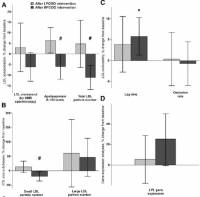
Changes from baseline values of (A) directly measured LDL concentrations, (B) LDL size distribution, (C) LDL oxidizability, and (D) LPL gene expression. * Significantly different from baseline. # Significantly different from LPCOO intervention.

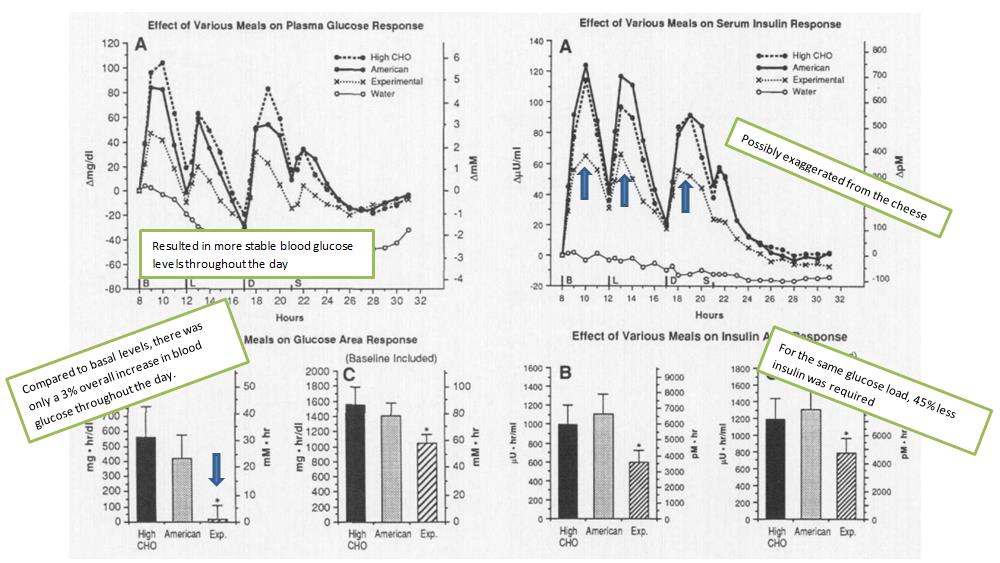
Dairy fat is a complicated topic because it is typically around 70% saturated fat but shows very inconsistent effects on blood lipids and cardiovascular disease (CVD) risk. However, if we narrow things down farther from dairy fat and focus on the foods which contain it, there is a lot of evidence from randomized controlled trials that diets high in saturated fat derived largely from butter fat increases LDL-c, whereas cheese intake results in lower LDL-c compared with butter of equal fat content. However, every trial showing these effects has used very high amounts of butter. For instance, one study replaced 13% of the subject’s caloric intake with butter, which corresponded to an average of 50 grams (almost one-half of a stick) of butter per day. In order to evaluate the effects of moderate butter consumption on CVD risk factors, Engel and Tholstrup from the University of Copenhagen, Denmark recruited 47 healthy...

Continue reading
  2823 Hits

Replacing saturated with unsaturated fat improves blood lipids, blood pressure, and cardiovascular disease risk without affecting the vasculature


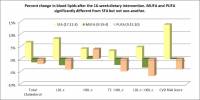
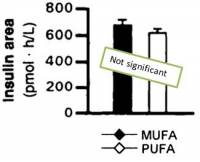
It was recently reported by an updated Cochrane Review that reducing saturated fat intake lowered the risk of having a heart attack without affecting the risk of dying from one. These effects were most pronounced when the saturated fat (SFA) was replaced by linoleic acid (PUFA), but there was surprisingly no observable benefit of replacement with monounsaturated fats (MUFA). However, the trials included in this meta-analysis were primarily interventions where only dietary advice was given to the participants who were then followed for some time, and the majority of participants were those who were at a high-risk of cardiovascular disease (CVD) and/or already had a heart attack. Thankfully, researchers from the University of Reading, UK recently published findings from the DIVAS study that should help shed some light on the issue of fat quality and CVD. The DIVAS study was a 16-week 195-person intervention in which the participants were randomized to...

Continue reading
  2330 Hits
SHR Logo

Super Human Radio is the world's longest running broadcast dedicated to health, fitness & anti-aging with an emphasis on exercise, nutrition, and hormone management. This one of the most progressive podcasts for preventative & regenerative techniques designed to increase longevity. More

2908 Brownsboro Rd Ste 103
Louisville, Kentucky 40206

(502)-690-2200

SHR Logo

Super Human Radio is the world's longest running broadcast dedicated to fitness, health, and anti-aging with emphasis on exercise, nutrition, and hormone management. The most progressive source of information for preventative & regenerative techniques... More

2908 Brownsboro Rd Ste 103
Louisville, Kentucky 40206
United States of America

+1 502-690-2200