• +1 502-690-2200
  • This email address is being protected from spambots. You need JavaScript enabled to view it.

Diet and weight loss are more important than exercise in the overweight-obese

Diet and weight loss are more important than exercise in the overweight-obese
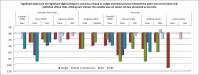
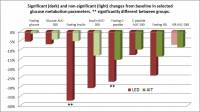
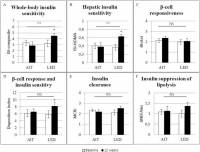
Changes from baseline in parameters of glucose metabolism
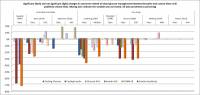
insulin sensitivity

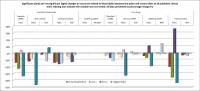
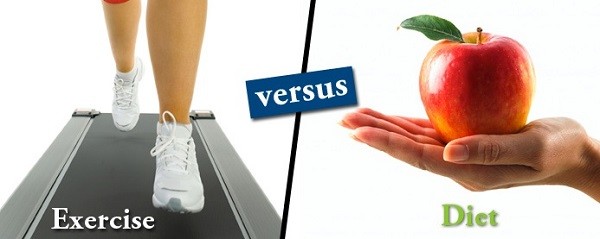
There are many benefits to be gained from exercise and weight loss in the overweight-obese population, and both are commonly prescribed to achieve cardiometabolic health improvements. However, exercise for weight loss is an inefficient and unsustainable route for many individuals. Instead, exercise should be done for health while weight loss is achieved through dietary modifications. But which has a greater impact? The answer comes from the University of Copenhagen, Denmark who recently published additional data from the CUT-IT study where 64 overweight-obese out-patients (age 45-75 years) with coronary artery disease (CAD) were randomized to undergo 12 weeks of aerobic interval training (AIT) three times weekly or consume a low-energy diet (LED) for 8-10 weeks followed by 2-4 weeks of transition to a high-protein/low-glycemic index diet. The AIT protocol involved a 38 minute session beginning with a 10-minute moderate-intensity warm-up followed by high intensity interval training (85-90% of VO2peak, Borg scale 17–18) on...

Continue reading
  4645 Hits

Make it to lunch and you're golden; effects of skipping breakfast don’t last forever

Make it to lunch and you're golden; effects of skipping breakfast don’t last forever
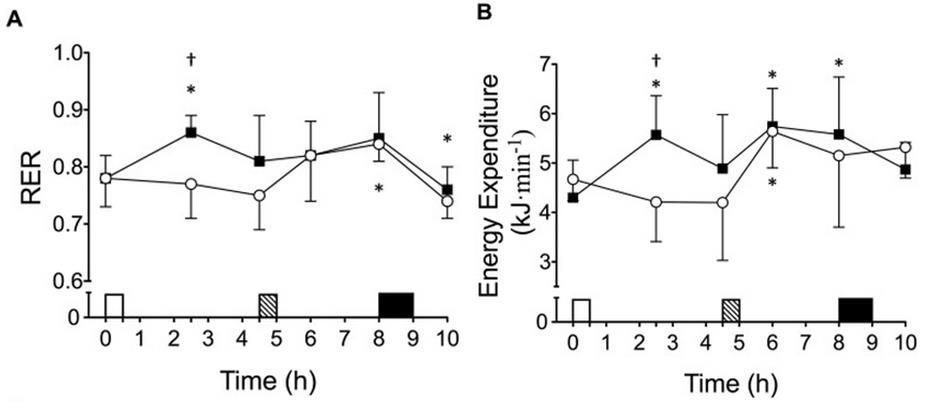
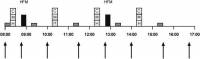
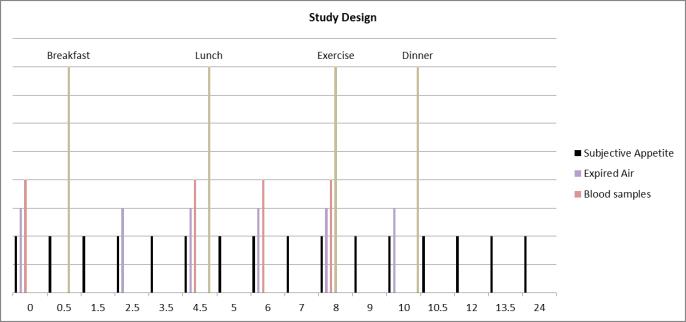
Experimental Protocol
Energy Expenditure
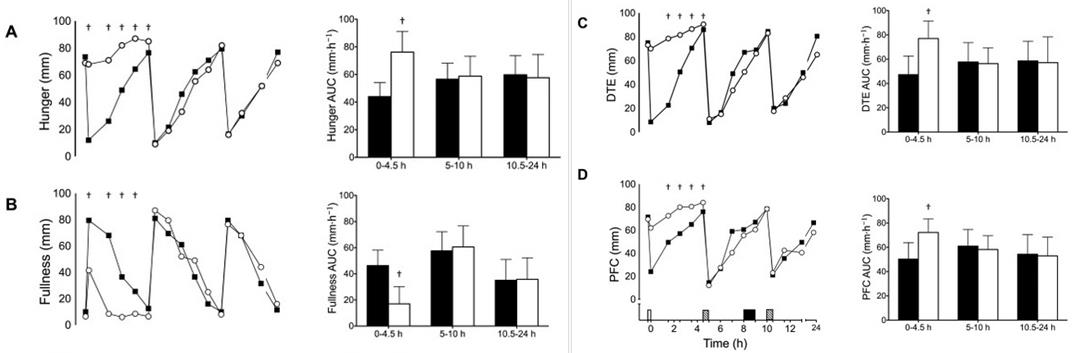
feelings of hunger

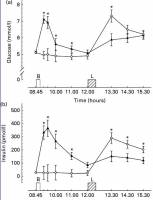
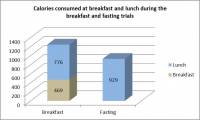
In a previous article I discussed a study showing that skipping breakfast does indeed lead to greater food and calorie intake during lunch, but not nearly enough to compensate for the calories not consumed at breakfast.  The researchers were able to show this outcome because they allowed for ad libitum food intake at lunch, meaning that the study participants could eat as much food as they wanted. This makes perfect sense considering the entire point of these studies is to compare how breakfast consumption or omission affects subsequent food intake, but it leaves an incomplete picture of the metabolic and hormonal effects breakfast may or may not have. What if eating as much food as you wanted at lunch wasn’t an option? What if you exercised later in the day? Many individuals who decide to skip breakfast do so in order to aid weight loss, and many may choose to monitor...
Continue reading
  1998 Hits

Is standing better than sitting?

Is standing better than sitting?
METs of various activities for healthy and obese adults.
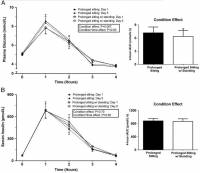
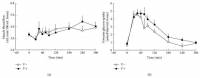
Fasting and postprandial (A) plasma glucose and (B) serum insulin concentrations on days 1 and 5 during the prolonged sitting (black triangle) and prolonged sitting interrupted with standing breaks (white circle) work conditions.
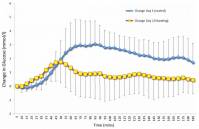
Continuous blood glucose monitoring after a lunch buffet when seated or standing.
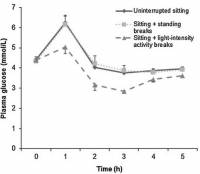
Postprandial blood glucose levels during sitting, standing, and walking
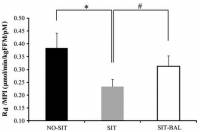
Whole-body insulin action (Rd/MPI) assessed during the continuous infusion of glucose across the 3 conditions.
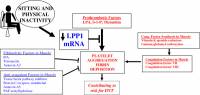
Items in red would favor a prothrombotic state while those in blue would be anti-thrombotic.

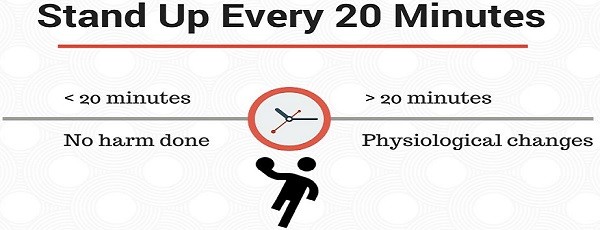
For years I have made every effort to stand rather than sit under the presumption that it is healthier. What started as a couple boxes stacked on top of a normal table for my computer quickly turned into a legitimate standing workstation. I eventually also bought a high-table that allowed me to stand while I eat without the food being a mile below my mouth. In fact, I probably spend less than an hour sitting on an average day where my need to travel by car is low and it has gotten to the point where my body physically hurts if I sit for more than about 20-30 minutes straight. I also become restless, my legs and butt start twitching spontaneously, and if I had recently eaten I suffer from digestive stress. These events are probably more psychological than physiological; stemming from my subconscious belief that sitting is doing me no...

Continue reading
  3574 Hits

Cutting calories and losing weight improve glucose metabolism in type-2 diabetes

Cutting calories and losing weight improve glucose metabolism in type-2 diabetes
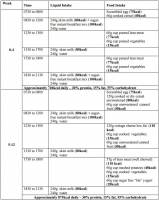
Sample Menu
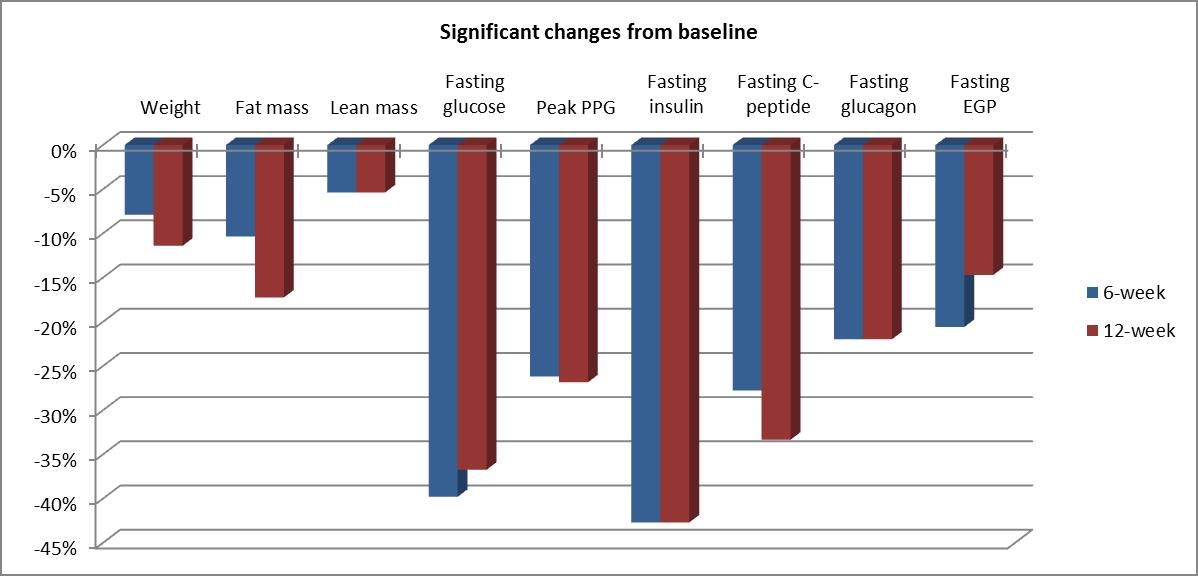
Significant improvements in glucose metabolism at 6 and 12 weeks

Individuals suffering from type-2 diabetes (T2D) can have a grocery list of health problems secondary to their condition, but the core issue is a dysregulation of glucose metabolism. The cause is multi-faceted and includes both genetic and environmental factors, but one consistently reappearing player is an excess amount of fat tissue – especially visceral fat. Therefore, it stands to reason that fat loss in individuals with T2D would lead to improvements in glucose metabolism. To test this hypothesis, researchers from the Mayo Clinic College of Medicine recruited 9 morbidly obese individuals with T2D (7 female) to follow a very low-calorie diet for 12-weeks. The diet consisted of 740 kcal daily for the first 4 weeks and 875 kcal daily thereafter, with meals derived from the Nutritional Guidelines for Bariatric Surgery. The participants met with a dietitian weekly and a behavioral psychologist every other week to facilitate compliance. Body composition measurements (DXA...

Continue reading
  3344 Hits

Olive oil reduces postprandial glycemia and oxidative stress in healthy people eating a great lunch

Olive oil reduces postprandial glycemia and oxidative stress in healthy people eating a great lunch

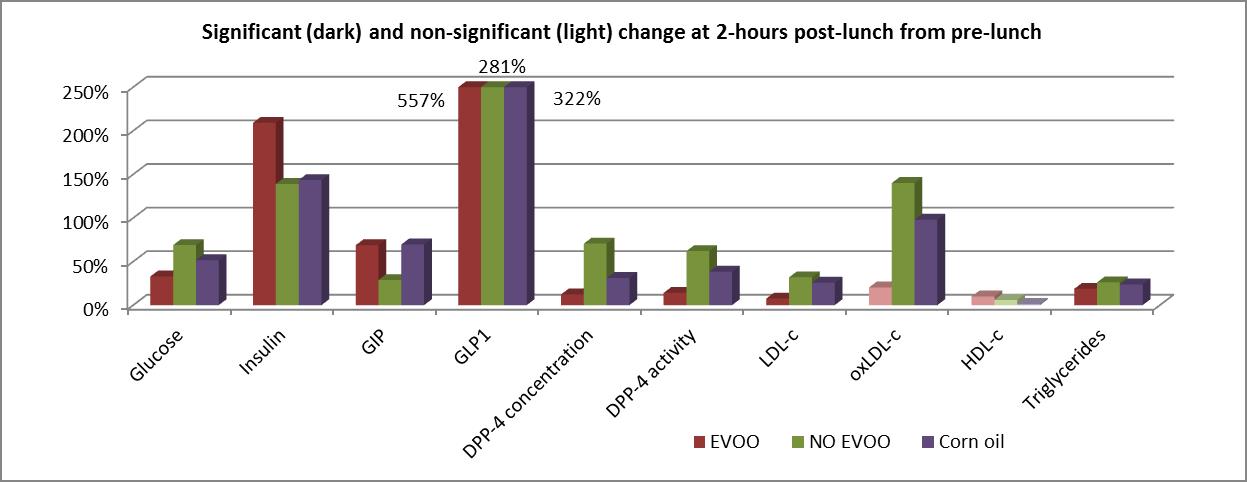
In previous articles, I wrote about a handful of studies that collectively demonstrated that consuming monounsaturated fat in place of saturated fat, even in small amounts, has beneficial effects on CVD risk factors, and that obtaining the monounsaturated fat from unadulterated whole-foods like unrefined olive oil and nuts can elicit even greater benefit through their secondary metabolites. However, these effects were obtained with chronic intake of at least one month and a largely uncontrolled for diet. This doesn’t downplay the health benefits by any means, but it does raise questions of whether these outcomes are observable within a single meal. To answer this, researchers from Sapienza University of Rome, Italy randomized 25 healthy male and female participants to consume a traditional Mediterranean lunch with or without 10g of extra virgin olive oil (EVOO) in a crossover design separated by 30 days. Compared to consuming the meal without EVOO, the small 10g...

Continue reading
  2228 Hits

Food order matters; eat your protein and veggies before your carbohydrates

Food order matters; eat your protein and veggies before your carbohydrates

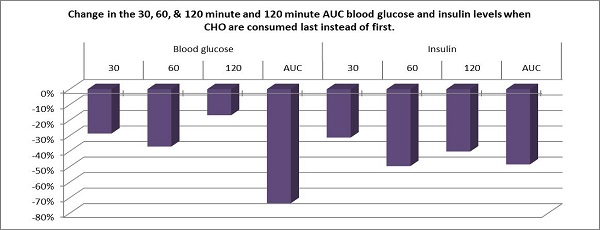
Time course of blood glucose and insulin
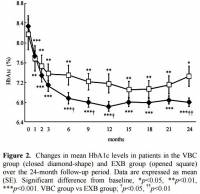
Changes in average HbA1c levels.
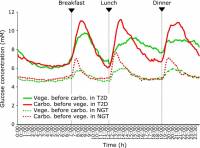
Continuous glucose monitoring.

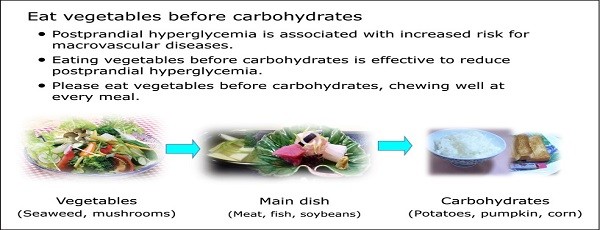
Imagine you are eating a meal; what do you eat first? Whether you are at a buffet, a nice sit-down restaurant, or cooking at home, meals typically have a combination of foods that can be roughly divided into proteins, fats, starchy carbohydrates, and fibrous vegetables. There is little to no debate that early treatment or prevention of postprandial hyperglycemia is important for health, especially in those with type-2 diabetes (T2D). Recently, researchers publishing in Diabetes Care asked whether the order in which a meal was consumed would influence the metabolic response to it in 11 T2D men and women. After a 12-h overnight fast, subjects consumed an isocaloric meal (628 kcal: 55 g protein, 68 g carbohydrate, and 16 g fat) with the same composition on 2 separate days, 1 week apart. During the first visit, the food order was carbohydrate (ciabatta bread and orange juice), followed 15 min later by...

Continue reading
  4349 Hits

Vinegar – glycemia’s best friend

Vinegar – glycemia’s best friend
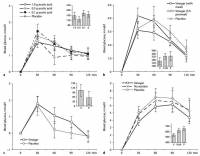
: Blood glucose responses at 0, 30, 60, 90 and 120 min for trials 1 (a), 2 (b), 3 (c), and 4 (d).
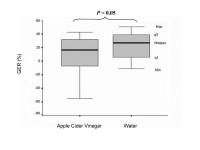
Gastric emptying of a rice pudding meal ingested with and without apple cider vinegar, expressed as the gastric emptying rate (GER), in ten type 1 diabetics with clinically diagnosed diabetic gastroparesis.
Effect of vinegar (black) and placebo (white) on muscle blood glow (a) and glucose uptake (b).
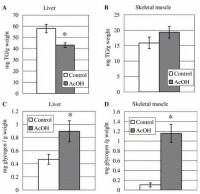
Fat (top) and glycogen (bottom) content of the liver (left) and skeletal muscle (right) in rats fed a standard diet with (grey) or without (white) acetic acid.

Every day for years I have made my best effort to consume vinegar with every meal. Whether this is apple cider vinegar mixed in carbonated water or a touch of white vinegar on steamed greens or rice, I always try and find a way to have my vinegar. If you asked me why, I would say that it helps reduce post-prandial glycemia (the blood glucose response following a meal). In fact, it was the first guest-post article I had written for Adel Moussa over at SuppVersity. Since then I have never really given vinegar a second thought, until a newly published study popped into my inbox that once again brought vinegar to my attention. Only this time, I want to do it more justice than I had in the short article I wrote for Adel. So, what is vinegar? Vinegar is a liquid consisting mainly of water and acetic acid, which...

Continue reading
  8944 Hits

Super Human Roundup: Exercise good for children, eating cholesterol raises cholesterol, and we know nothing about bioactives

Testing protocol

Exercise throughout the day is healthy for children!... We need research to tell us this? I would be flabbergasted (awesome word) to find someone who thinks exercise throughout the day isn’t healthy, but at least now we have research documenting it. Nineteen 13-14 year old boys and girls visited the laboratory on four difference occasions where they completed in a randomized order: (1) two, 1 minute intervals at 90% VO2max, separated by 75 seconds of rest (HIIE); (2) ~ 6 min of cycling at 90% GET (MIE); or (3) remained seated and watched TV (control; CON). The exercise bouts were repeated four times, each separated by two hours, and on two occasions the adolescents consumed a milkshake providing 19 kcal/kg bodyweight (75% FAT, 25% CHO, 5% PRO). The exercise protocols had absolutely no effect on post-prandial levels of triglycerides, suggesting that neither high- nor medium-intensity exercise can save a kid from a fat bomb. However,...

Continue reading
  1527 Hits

Paleo in practice – a review of the research

Paleo in practice – a review of the research
Summary of dietary macronutrients
Summary of changes in weight and blood pressure.
Summary of changes in blood glucose regulation
Summary of changes in blood lipids.

Let there be no ambiguity, I do not agree with every aspect of the paleo diet. But this does not mean that I am against it. I believe that the paleo diet lays out very simple guidelines that virtually any person can follow with ease, and this in turn serves as an excellent starting point – “blank slate” or “template” if you will – from which a person can experiment and find what works best for their individuality. There is certainly no shortage of anecdotal testimonials to support the notion that “switching to” a paleo diet benefits health and wellbeing, but many of the claims are incredibly hyperbolic and there is literally no way for anyone to know if this was owed to the paleo diet, per se. This is why research exists – to build and organize knowledge in the form of testable explanations and predictions. So what can we...

Continue reading
  3408 Hits

Better to fast than to eat a crappy breakfast

Better to fast than to eat a crappy breakfast


Breakfast has long been hailed the most important meal of the day, and a temendous amount of research has been conducted to compare breakfasts of varied quantity or composition. However, recent evidence does indeed suggest that this meal is overrated. As David Levitsky from Cornell University puts it, “Myths abound in nutrition. Many, like the consumption of breakfast, are driven by powerful commercial interests. In the current environment in which the major nutritional problem we face is the increasing prevalence of obesity, we, as nutrition scientists, must consider the possible harm we are doing by perpetuating myths such as the value of consuming breakfast. Surely, eating breakfast adds to the quality of nutrients consumed, but breakfast foods can be eaten at lunch or dinner as well.” This isn’t to say that breakfast is bad, although that argument could be made if you look at what most Americans are eating for breakfast, but...

Continue reading
  2407 Hits
SHR Logo

Super Human Radio is the world's longest running broadcast dedicated to health, fitness & anti-aging with an emphasis on exercise, nutrition, and hormone management. This one of the most progressive podcasts for preventative & regenerative techniques designed to increase longevity. More

2908 Brownsboro Rd Ste 103
Louisville, Kentucky 40206

(502)-690-2200

SHR Logo

Super Human Radio is the world's longest running broadcast dedicated to fitness, health, and anti-aging with emphasis on exercise, nutrition, and hormone management. The most progressive source of information for preventative & regenerative techniques... More

2908 Brownsboro Rd Ste 103
Louisville, Kentucky 40206
United States of America

+1 502-690-2200