• +1 502-690-2200
  • This email address is being protected from spambots. You need JavaScript enabled to view it.

Carl Lanore has your back in a way that, traditionally, very few people in this life ever do. On the surface he is the broadcast host of his own Internet program “Super Human Radio” on the SHOUTcast digital network with a solid listenership of over half-a-million homogenous people that is growing every week.

More About Carl Lanore

There is more to deliciousness than just food on the plate

There is more to deliciousness than just food on the plate

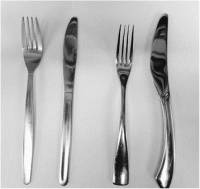
'Canteen' cutlery on the left; 'banquet' cutlery on the right

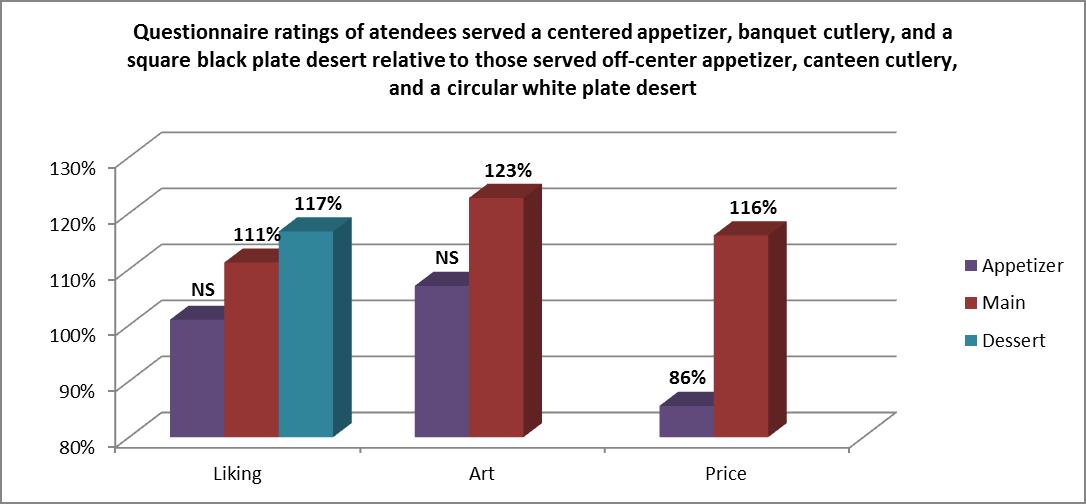
Plating is the art of making food look good. Obviously the organoleptic properties play a fundamental role in determining how much we like eating something, but our food experiences are also influenced by the visual and structural arrangement of the plate. Now, new research published in Flavour by researchers from the University of Oxford extends this influence to the cutlery we use to eat. The goal of the researchers was simple: invade an international conference being held at the Sheraton Grand hotel in Edinburgh and determine how minute changes to the appetizer, main course, and desert influenced the attendees’ perceived liking of the dish. How did they do this? They put a pink or green score sheet on each table and gave orders to the wait staff to set the tables and serve dishes a certain way. Aside from that, all food eaten by the attendees was exactly the same. AppetizerPloughmans, ham...
Continue reading

Super Human Roundup: Iron a double-edged sword, fat and microRNA, and rock climbing strength

Iron and metabolic syndrome; a shield for women and sword for men In an analysis of 3,271 Swiss men and women, Kilani et al found a significant relationship between serum transferrin levels and increased risk of metabolic syndrome (MetS) in men only, whereas serum iron was found to be significantly protective against MetS in women. Ferritin showed no associations with either sex. Although causality cannot be determined, two mechanisms have been proposed. The first is that MetS leads to increased inflammatory status that leads to changes in iron homeostasis. The second is that elevated transferrin leads to MetS through a complex web of mechanisms beginning with excessive formation of reactive oxygen species and ending with insulin resistance and related comorbidities. It’s the little things MicroRNAs (miRNAs) are small noncoding RNAs that have the ability to control multiple genes and govern remote bodily processes through intertwined pathways. Researchers from the University of...

Continue reading

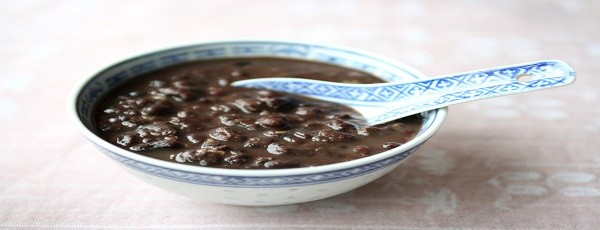
Beans, beans, the magical fruit, the more you eat, the more you…

Beans, beans, the magical fruit, the more you eat, the more you…
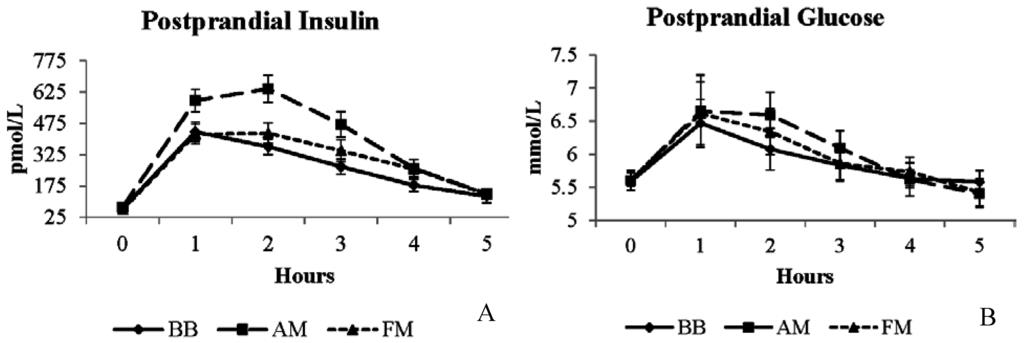
Postprandial insulin (A) and glucose (B) responses to moderate-fat breakfast with BB, AM, or FM. BB, black bean meal; FM, fiber matched meal; AM, antioxidant matched meal.

Nowadays, people love looking for their health solutions in the form of a pill and companies bank off isolating and selling functional components of foods as dietary supplements. But as Elizabeth Reverri and colleagues from the University of California Davis point out, “functional ingredients may not produce the same effects when delivered outside a whole food matrix.” These researchers were interested in understanding how the food matrix contributed to the health benefits of two compounds: antioxidants and fiber. And what better group of subjects to test potential health benefits than overweight-obese men and women with metabolic syndrome. This study was a randomized, controlled, crossover trial consisting of three study days, each separated by one week, in which the 12-hour overnight-fasted subjects consumed a black bean (BB), fiber-matched (FM), or antioxidant-matched (AM) breakfast meal made of commercially available Western-style foods and had blood draws before and for 5 hours postprandially. Meal composition...

Continue reading

Food order matters; eat your protein and veggies before your carbohydrates

Food order matters; eat your protein and veggies before your carbohydrates

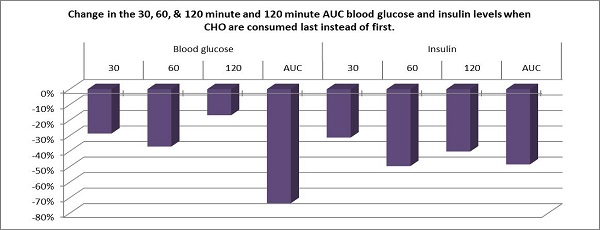
Time course of blood glucose and insulin
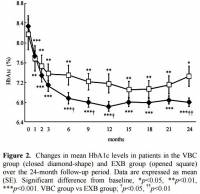
Changes in average HbA1c levels.
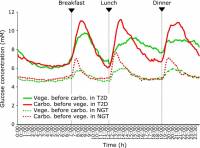
Continuous glucose monitoring.

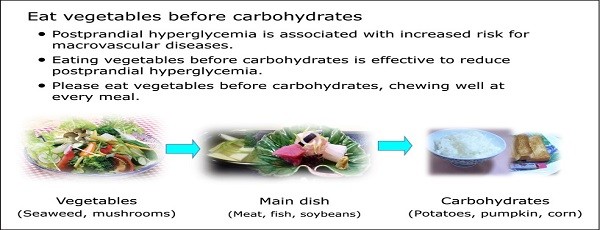
Imagine you are eating a meal; what do you eat first? Whether you are at a buffet, a nice sit-down restaurant, or cooking at home, meals typically have a combination of foods that can be roughly divided into proteins, fats, starchy carbohydrates, and fibrous vegetables. There is little to no debate that early treatment or prevention of postprandial hyperglycemia is important for health, especially in those with type-2 diabetes (T2D). Recently, researchers publishing in Diabetes Care asked whether the order in which a meal was consumed would influence the metabolic response to it in 11 T2D men and women. After a 12-h overnight fast, subjects consumed an isocaloric meal (628 kcal: 55 g protein, 68 g carbohydrate, and 16 g fat) with the same composition on 2 separate days, 1 week apart. During the first visit, the food order was carbohydrate (ciabatta bread and orange juice), followed 15 min later by...

Continue reading

Olive oil reduces postprandial glycemia and oxidative stress in healthy people eating a great lunch

Olive oil reduces postprandial glycemia and oxidative stress in healthy people eating a great lunch

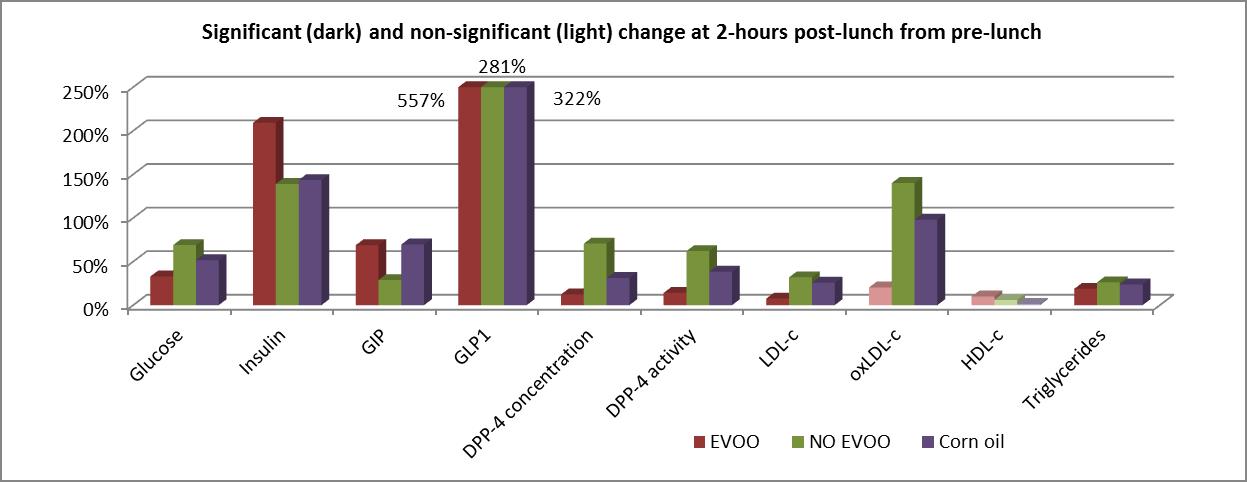
In previous articles, I wrote about a handful of studies that collectively demonstrated that consuming monounsaturated fat in place of saturated fat, even in small amounts, has beneficial effects on CVD risk factors, and that obtaining the monounsaturated fat from unadulterated whole-foods like unrefined olive oil and nuts can elicit even greater benefit through their secondary metabolites. However, these effects were obtained with chronic intake of at least one month and a largely uncontrolled for diet. This doesn’t downplay the health benefits by any means, but it does raise questions of whether these outcomes are observable within a single meal. To answer this, researchers from Sapienza University of Rome, Italy randomized 25 healthy male and female participants to consume a traditional Mediterranean lunch with or without 10g of extra virgin olive oil (EVOO) in a crossover design separated by 30 days. Compared to consuming the meal without EVOO, the small 10g...

Continue reading

Super Human Roundup: Is exercise really medicine? Can you chew your appetite away?

Is Exercise Really Medicine? An Evolutionary Perspective Daniel Lieberman from the Department of Human Evolutionary Biology, Harvard University recently published an editorial in Current Sports Medicine Reports asking several questions: Why do so many people fail to act in their own best self-interest, at least in terms of promoting good health? Why is exercise actually necessary for health? And what explains the exercise paradox: most people avoid exercise even though physical activity is vital for health? To answer these questions, Lieberman adopts an evolutionary perspective, asking first what types of exercise humans are adapted for and then why exercise may be considered medicine. Obviously all animals are adapted for some type of physical activity, but humans are unique among the primates in that we evolved to run; we became bipedal, started sweating, and developed big butts. In short, the demands of hunting and gathering account for a wide range of novel...

Continue reading

How much protein should I eat?

How much protein should I eat?
Christian Bale's 1-year transformation for
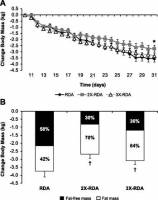
Changes in body composition in dieters (40% deficit) consuming 0.8 (RDA), 1.6 (2X-RDA), and 2.4 (3X-RDA) g/kg BW protein
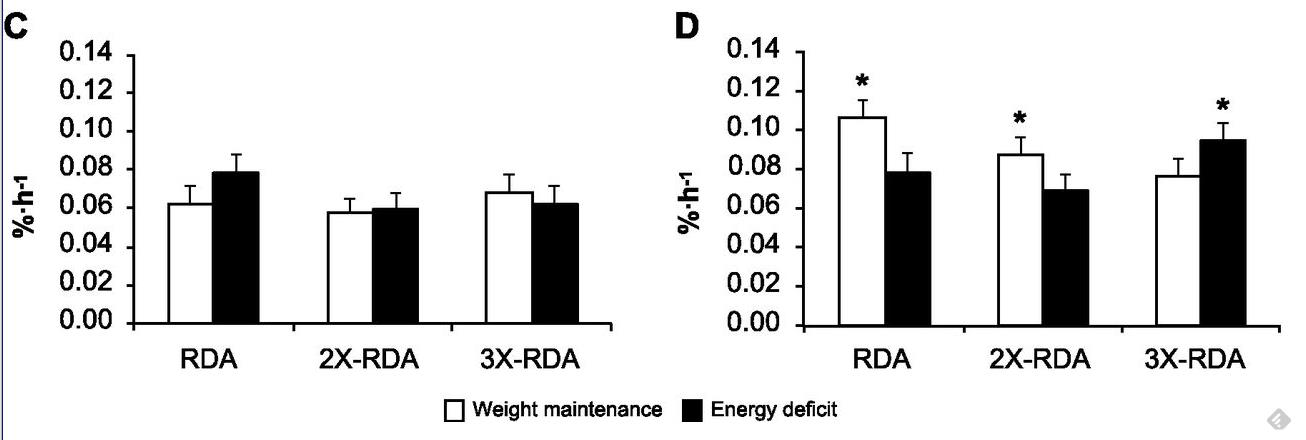
Postabsorptive (fasting) muscle protein synthesis (C) and postprandial muscle protein synthesis (D) responses to varying levels of dietary protein intake.
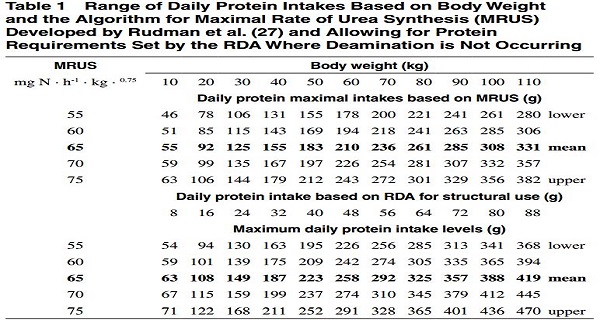
Range for theoretical protein intake at different bodyweights before toxicity would occur based on Rudman's work.

Protein is arguably the most important macronutrient we eat, and all the protein we accrue within the body is in the form of muscle, organs, and countless of other essential compounds. In fact, the typical human cell is roughly one-fifth protein by mass. Unlike carbohydrates and fat, there is no storage form of protein on the body that sits around waiting to be used – every single amino acid plays an important role in our wellbeing. Although it may not necessarily be healthy, the body can survive indefinitely without carbohydrate intake and for a very long time with little to no fat intake. On the other hand, insufficient protein intake leads to rapid death. Generally speaking, all tissues in the body are under a state of constant remodeling via protein breakdown and synthesis. These processes are distinct physiological pathways (not simply the reverse of one-another) and their relationship can be referred...

Continue reading

Infant formulas, baby foods, and kid-friendly grocery foods: 74% have >20% kcal from sugar

Infant formulas, baby foods, and kid-friendly grocery foods: 74% have >20% kcal from sugar
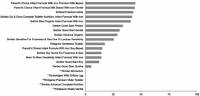
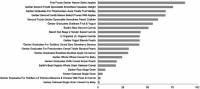
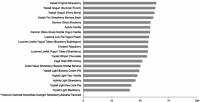
Percent of total calories from sugar: Formula. ** Unable to calculate in premixed, ready to use samples.
Percent of total calories from sugar: Baby Food.
Percent of total calories from sugar: Yogurt. ** Label specifies no sugar.

Ryan Walker from the Icahn School of Medicine at Mount Sinai and Michael Goran from the University of Southern California sought to determine actual sugar content and composition in commonly used infant formulas, baby foods, and other grocery items frequently marketed towards children. After looking through the online shopping databases for three of the U.S.’s largest grocery retailers – Walmart, SuperValu, and Safeway – they selected every tenth product from infant formulas, baby food, yogurt, breakfast cereal, and packaged baked goods and purchased all products from the retailers in a defined zip-code region in Los Angeles to help control for location and inventory. Twenty products per category were chosen for analysis. The results were not pretty The average percent of total calories supplied by sugar in infant formulas was 27.4%, with five having greater than 40%. Since most formula attempts to mimic breast milk, it was no surprise that most were...

Continue reading

Creatine is good for the bones of postmenopausal women

Creatine is good for the bones of postmenopausal women
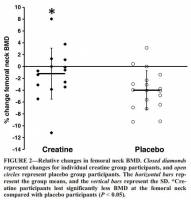
Relative changes in femoral neck BMD.

If I were to recommend a single supplement for another to take, it would be creatine monohydrate. Its benefits spread far beyond increases in muscle mass and athletic performance towards neurological protection and musculoskeletal health. More recently, creatine has been suggested as a maternal supplement to act as a “multi-organ protectant” for the fetus and neonate that gives it a promise not provided by the current therapies. Most importantly, creatine has an overwhelming base of evidence demonstrating it to be safe. Now, a new study extends creatine’s benefits onto the bone health of postmenopausal women. In this double-blind, parallel-group, randomized controlled trial, 33 otherwise healthy postmenopausal women engaged in a 12-month supervised resistance training program with or without creatine supplementation of 0.1 g/kg/day consumed in a split dose before and after training sessions or with two separate meals on non-training days. Exercise training involved fully supervised resistance training three times per week. Exercises...

Continue reading

Super Human Roundup: Olive oil and fiber for diabetes and the motivating factors and barriers to healthy eating in young men

Olive oil protective against type-2 diabetes in women That’s the conclusion of a recent paper by researchers from the Harvard School of Public Health who analyzed data of over 145,000 women from the Nurses’ Health Study I and II. After a 22-year follow-up, it was found that each additional 8 gram intake of olive oil was associated with a 6% reduced risk of developing type-2 diabetes, regardless of whether it was consumed as a salad dressing or added to food or bread. Additionally, replacing 8 grams of stick margarine, butter, or mayonnaise with 8 grams of olive oil was associated with a 5, 8, & 15 % predicted lower risk of T2D, respectively. Is soluble fiber protective against type-1 diabetes? A low-fiber diet has been associated with other inflammatory or autoimmune diseases such as colon cancer and irritable bowel syndrome, so why not type-1 diabetes as well? Soluble fibers may be...

Continue reading
SHR Logo

Super Human Radio is the world's longest running broadcast dedicated to health, fitness & anti-aging with an emphasis on exercise, nutrition, and hormone management. This one of the most progressive podcasts for preventative & regenerative techniques designed to increase longevity. More

2908 Brownsboro Rd Ste 103
Louisville, Kentucky 40206

(502)-690-2200

SHR Logo

Super Human Radio is the world's longest running broadcast dedicated to fitness, health, and anti-aging with emphasis on exercise, nutrition, and hormone management. The most progressive source of information for preventative & regenerative techniques... More

2908 Brownsboro Rd Ste 103
Louisville, Kentucky 40206
United States of America

+1 502-690-2200